

You are using an out of date browser. It may not display this or other websites correctly.
You should upgrade or use an alternative browser.
You should upgrade or use an alternative browser.
Deoxit D5 considered harmful for carbon potentiometers?
- Thread starter ocdecio
- Start date
-
- Tags
- deoxit potentiometers
Register to hide this ad


Good to know! I'll do the same. Not that I had abused it, but this seems to be a good cautionary tale.I stopped using D5 on pots after a 1200 balance control carbon track came right off.
Tony

Steven Tate
CEO Flat Forehead Soc.
Very interesting. I have seen several of his videos, and he seems to know what he is talking about. My procedure has always been a quick flush with Deoxit red, work the pot several times, blow out with canned air, a puff of Faderlube, work it, blow out with canned air. I never wanted a lot of residue left behind. This may have saved me. I may eliminate the Deoxit red and just use the Faderlube followed by canned air and see how it goes.


i use D100 on the pots followed by a bit of F100. D100 shouldnt hurt the carbon tracks. I use F100 on the switches and sliders. F5 for cleaning RCA's and other connectors.

jd3rdcoast
Super Member
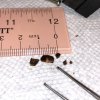
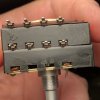
Some time earlier this year I had receiver with an Alps 50K enclosed block volume pot. It was hanging up internally like it was jammed. I loosened the screws holding the case together and gently separated the layers slightly to get a peek inside and found chunks of the wafer board floating around inside. It was literally disintegrating and crumbling to pieces. Not wanting to do any more damage I got a couple drops of F100 inside and closed it back up. Wouldn't be surprised if multiple dousings of D5 caused the boards to start falling apart.


Bill Ferris
Lunatic Member
FWIW. 45 plus yrs. servicing electronics had early on taught me that using any brand of contact cleaner sprayed into any pot is a super no, no and asking for problems or out right failure !
In the mid eighties ~nineties even using RS`s inexpensive TV tuner/control cleaner spray worked very well for me with no problems even reworking $$,$$$. $$ 48 channel analog pro mixing consoles/boards brought to me where every single pot/fader was hosed out with it !
When EPA put an end to CFC based spray products in the early nineties, and RS quit carrying them and when I ran out of the close out discounted priced cases of their service sprays and LPS spray product prices started becoming too expensive locally around here, was when I finally switched over to Caig & CRC products..
One, IMHO/E. should never spray contact cleaner into any pot !
Your gear, do as you wish.
Ciao
In the mid eighties ~nineties even using RS`s inexpensive TV tuner/control cleaner spray worked very well for me with no problems even reworking $$,$$$. $$ 48 channel analog pro mixing consoles/boards brought to me where every single pot/fader was hosed out with it !
When EPA put an end to CFC based spray products in the early nineties, and RS quit carrying them and when I ran out of the close out discounted priced cases of their service sprays and LPS spray product prices started becoming too expensive locally around here, was when I finally switched over to Caig & CRC products..
One, IMHO/E. should never spray contact cleaner into any pot !
Your gear, do as you wish.
Ciao
Bill Ferris
Lunatic Member
So how do YOU do your cleaning these days?
CRC brand quick drying lessor expensive than Caig contact cleaner for switch contacts/jacks & most Caig products for everything else.
I also use denatured alcohol for circuit board flux/grime removal sprayed from a repurposed household chemical cleaning spray bottle that has an adjustable spray nozzle for focused stream or wide spray pattern.
More specifically - do you have a product or procedure you use to clean carbon potentiometers / sliders?CRC brand quick drying lessor expensive than Caig contact cleaner for switch contacts/jacks & most Caig products for everything else.
I also use denatured alcohol for circuit board flux/grime removal sprayed from a repurposed household chemical cleaning spray bottle that has an adjustable spray nozzle for focused stream or wide spray pattern.
Bill Ferris
Lunatic Member
More specifically - do you have a product or procedure you use to clean carbon potentiometers / sliders?
I check their full range function first, then apply Doxit Fader Lube, if acting up, though if the device is rather long in the tooth, then I often give the controls a preemptive quick shot of the proper selection of Deoixit Faderlube with full several rotations of the control, or if a linear cycle control from top to bottom several times.
Then check while on the bench to determine proper function, and move on from there. Device dependent, as servicing chemicals are pricy and I care not to waste.
Usually during the early portion of the initial check out of the device, to prevent any issues of crusty controls/switches thwarting my evaluation of the device`s heath before proceeding further..
The device`s manners will indicate it`s control/switch/connections needs during checkout.
Don`t wish to waste time chasing connectivity issues..

kevzep
Its all about the Music
I've never used D5 in pots because I read the product information when I was looking for contact cleaner, which is what it is. It says its not suitable for pots.....
Always a very small amount of F5, and never drown them. It actually works better when you use less.
Tony does a good video here about it all....
I have had to deal with an increasing amount of pots destroyed by being drowned in D5 lately.....
People go wild with it!! Is not a hoot at all!!
Always a very small amount of F5, and never drown them. It actually works better when you use less.
Tony does a good video here about it all....
I have had to deal with an increasing amount of pots destroyed by being drowned in D5 lately.....
People go wild with it!! Is not a hoot at all!!

Jamie Starr
Active Member
Wow. Seems like every Marantz thread I’ve read here said to “deox” the pots. I have used Deoxit-5 on every restoration I have done……………… uh-oh. This is at odds with Mark from Blueglow.
Last edited:

Just watched this on youtube:
Should that change anything on how we usually go about cleaning pots with CAIG products?
There is an excellent rant at the end of the video regarding the new hated hinged straws on Caig spray cans.
I'll add one more:
Do you have any idea of the threads/computer time/bits and bytes and destroyed pots and switches that could have been saved if only Caig could label their products in a manner that doesn't require a lot of digging and interpretation of MSDS sheets?
This discussion has been literally going on for years (not just on AK)
Why the big mystery?
Just put it on the damn can: Product A is for switches and contacts only but could destroy wafer switches. Not for potentiometers.
Product B is for potentiometers.
End of Rant.

Last edited:
Absolutely agree. I don't consider myself a specialist but not an idiot either and I got confused and probably used them all wrong.Just put it on the damn can: Product A is for switches and contacts only but could destroy wafer switches. Not for potentiometers.
Product B is for potentiometers.
End of Rant.

ConradH
Lunatic Member
IMO, one of the problems is that pots have been manufactured for almost 100 years, using various recipes for the carbon track. Some are robust, others not so much. Deoxit D-series is designed for metal contacts. IMO, it's the wrong stuff for carbon pots, though lots of people, me included, use it for that and if you read the Deoxit FAQ, they don't caution against it. They do say OK for "most" pots. You don't know what the carbon track is or how close the track and wiper are to being truly worn out. They don't last forever you know. Now, Deoxit does say not to use any of their products with solvent in vintage equipment, but go with the 100% liquid. Because I was around when the stuff was new, I sometimes fail to appreciate that much of our beloved hifi equipment is rather old, definitely vintage and caution needs to be applied.

D5 is for metal contacts FaderLube is for carbon pots.
Similar threads

- Replies
- 10
- Views
- 2K


- Replies
- 63
- Views
- 36K

- Replies
- 1
- Views
- 857


