• The move to the new server is done. There are some software and database maintenance updates in process. This has us passing the hat around to help out. We appreciate any donations. Seriously, even a dollar helps. The payment page may be found here - https://www.audiokarma.org/support.html

Deoxit D5 considered harmful for carbon potentiometers?

Lubricating with liquid spray in the long run will do more harm than good
Only one methood is to completly disassembly, clean and assembly potentiometer or switch

This one was deoxited as any others
On the left untouched yet, only sprayed, on the right cleaned manually
20210910_112513.jpg

So...dont use any sprays, just disassembly, clean and you will be happy with your full working contactors for next 30 years

20210909_173953.jpg

And for last, look what those sprays do with plastic/contactors after few months, not to mention that they become noisy again...
I made English subtitles afair
 
Rule of thumb that I use is if it doesn't state it's safe for conductive plastics it doesn't get sprayed into a pot. Pretty much just a spritz of Faderlube F5 and move on is my MO.

Paul Carlson of Mr. Carlson't Lab recommends spraying a pot, waiting 24 hours and spraying it again. His reasoning is that the first spray loosens up the crud and the second removes it. Sounds plausible.
 
None of the spray will lossen the dirt, no matter what methood you will use, spray or soak in liquid.

Only one right methood is to remove the dirt mechanicaly for example using sticks for ears cleaning, the cleaning fluid used has secondary importance since after all you have to clean everything with isoprophanol, for carbon traces on potentiometers im using valvoline clean tronic, for wipers and other contactors im using also valvoline clean tronic for medium dirt and sometimes argentum if the dirt wont come off that easy.
Like many times I said, spraying in long time will lead to destruction of plastic elements and contactors what I showed on movie and many other pictures shown on forum

But its your gear and you can do what ever you want
 
This is what I use. Have used it on Marantz 7C, 8B bias pots, and many other vintage components with great success and no problems.

David

70125581.jpg
 
I've been using DN5 in potentiometers for 15 years. Haven't had a pot fail yet because of it..I never use D5 in pots, switches only.
 
I have had to deal with an increasing amount of pots destroyed by being drowned in D5 lately.....
People go wild with it!! Is not a hoot at all!!
Hmmmh .. updated video 9mths ago here indicates otherwise and includes official statement from Caig especially on both D5 and F5 being fine for carbon track.

 
It’s there in the name, Faderlube is for variable resistors using carbon tracks, or faders. DeOxit is for metal contacts. Use whatever you want, but there’s a difference.
Noted and thanks !

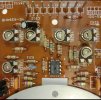
How does one tell if variable resistors are carbon track ? More specifically, are these tiny ones in attached photos of 30 yrs old Denon dp-47f turntable's pcba are of carbon track ?

Thanks again and cheers.

20230715_113733.jpg
 
The VR is for variable resistor. They have the top metal piece (wiper) that turns to a different spot on a carbon track (dark bottom part). Think the distance the electrons flow on the carbon determines the resistance, the ohms are in the carbon. The carbon track will wear, probably faster if there’s junk on it. So having it clean and lubed reduces wear. This is where you want Faderlube, as well as for volume/balance pots, or anything else with a carbon track.

DeOxit is for metal contacts, like source selector switch or speaker switches, etc. It takes the oxidation off metal so there’s better connection. Again the title tells the story, DeOXIT for metal oxidation.

Look on Youtube for xraytonyb who does a lot of repair videos. He has one on cleaning pots where he disassembles one and shows how he cleans the different parts, both metal and carbon.
 
The VR is for variable resistor. They have the top metal piece (wiper) that turns to a different spot on a carbon track (dark bottom part). Think the distance the electrons flow on the carbon determines the resistance, the ohms are in the carbon. The carbon track will wear, probably faster if there’s junk on it. So having it clean and lubed reduces wear. This is where you want Faderlube, as well as for volume/balance pots, or anything else with a carbon track.

DeOxit is for metal contacts, like source selector switch or speaker switches, etc. It takes the oxidation off metal so there’s better connection. Again the title tells the story, DeOXIT for metal oxidation.

Look on Youtube for xraytonyb who does a lot of repair videos. He has one on cleaning pots where he disassembles one and shows how he cleans the different parts, both metal and carbon.
Hey JJ, Tks again !
 
The issue of D5 is not really with the D5 itself but rather the remaining 95%. For years I have been using D100 and have cut it with 92% isopropyl alcohol. I have never had an issue with this combo. I flush the devices with the isopropyl mix and after drying I add a small touch of D100 to finish it off.
 
The issue of D5 is not really with the D5 itself but rather the remaining 95%. For years I have been using D100 and have cut it with 92% isopropyl alcohol. I have never had an issue with this combo. I flush the devices with the isopropyl mix and after drying I add a small touch of D100 to finish it off.
Strange .. utube video demoed even reportedly official statement from Caig. I err on the safe side as I refurnbishes newly acquired mint/unused Denon dp-47f especially for cheaply made variable resistors that are with carbon track .. with Deoxit F5. Cheers.
 
Last edited:
DeOxit is for metal contacts, like source selector switch or speaker switches, etc. It takes the oxidation off metal so there’s better connection. Again the title tells the story, DeOXIT for metal oxidation.

Deoxit is both D5 and F5. Deoxit D5 for metal oxidation.
 
Last edited:
None of the spray will lossen the dirt, no matter what methood you will use, spray or soak in liquid.

Only one right methood is to remove the dirt mechanicaly for example using sticks for ears cleaning, the cleaning fluid used has secondary importance since after all you have to clean everything with isoprophanol, for carbon traces on potentiometers im using valvoline clean tronic, for wipers and other contactors im using also valvoline clean tronic for medium dirt and sometimes argentum if the dirt wont come off that easy.
Like many times I said, spraying in long time will lead to destruction of plastic elements and contactors what I showed on movie and many other pictures shown on forum

But its your gear and you can do what ever you want
Unfortunately not possible with the miniature variable resistors that I wish to clean up a bit as maintenance and hope no worse of these 30 yrs old parts. Cheers.
 
The VR is for variable resistor. They have the top metal piece (wiper) that turns to a different spot on a carbon track (dark bottom part). Think the distance the electrons flow on the carbon determines the resistance, the ohms are in the carbon. The carbon track will wear, probably faster if there’s junk on it. So having it clean and lubed reduces wear. This is where you want Faderlube, as well as for volume/balance pots, or anything else with a carbon track.

DeOxit is for metal contacts, like source selector switch or speaker switches, etc. It takes the oxidation off metal so there’s better connection. Again the title tells the story, DeOXIT for metal oxidation.

Look on Youtube for xraytonyb who does a lot of repair videos. He has one on cleaning pots where he disassembles one and shows how he cleans the different parts, both metal and carbon.
Unfortunately not possible with the miniature variable resistors that I wish to clean up a bit as maintenance and hope no worse of these 30 yrs old parts after sparing application of F5. Cheers.
 
Unfortunately not possible with the miniature variable resistors that I wish to clean up a bit as maintenance and hope no worse of these 30 yrs old parts after sparing application of F5. Cheers.
Ok, if we‘re only speaking of the VRs on the board a couple of points.
First, they only get moved when someone is making adjustments, so not much wear.
Second, they can get dirty/dusty since they are not enclosed.

As far as F5 or D5 are concerned they’re actually made by Caig.
 
Back
Top Bottom