• The move to the new server is done. There are some software and database maintenance updates in process. This has us passing the hat around to help out. We appreciate any donations. Seriously, even a dollar helps. The payment page may be found here - https://www.audiokarma.org/support.html

JBL 100t vs. HPM 100

The pair I owned were not mirror imaged and I don't think they came that way. How about an explanation as to why they should be?
That'll be part of my own analysis of the frequency response curves. There's clues in them, tho. :yes:

I'm holding off on that 'til we see if anybody else wants to kick in an interpretation here, maybe another day or so.

[I need more ideas, yet, is what.... :p: ]
 
Thanks Ray!

Best I have found, these are not mirror-imaged.

Anybody know different?

[It matters.... :yes: ]


Forgive my ignorance, but isn't mirror-imaging a reference to the physical location of the drivers in each cabinet?:scratch2: I'm almost positive that mirror-imaged HPM-100s were never made.

Jeff
 
The pair I owned were not mirror imaged and I don't think they came that way. How about an explanation as to why they should be?

Depends on setup but here's a fer instance...if the speakers are not mirror imaged and are setup so that they're not pointed directly at you in the listening position then the differential in driver distances will be different for the two sides.

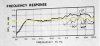
Now I'll try it in plain English in case I didn't come across clearly. If you are in the prime position and have the speakers pointed straight at you then (within reason) the distance from each driver to you will be the same in each speaker. However, if you adjust them so that they are pointed straight ahead to get out of the "hot zone" shown on the FR plots then things change. On the left speaker the mid will get further away from you and the tweeter will get closer. On the right just the opposite will occur. So you will end up with different path lengths from either side for different drivers. This will monkey with your imaging at the very least. Depending on crossovers and actual distances you can get comb filtering too.

For the "clues in the FR plots" compare the off axis curves to a single driver on/off axis plot. Try this one:
http://www.partsexpress.com/pdf/297-305.pdf

Ray
 
So they are almost as good as an HPM 900....:scratch2::D

Had both... I don't know which one is really better.

The L100T seemed to have slightly cleaner bass, while the HPM900 had a little more in the midbass punch department.

In the highs, I think the L100T3 wins, by a small margin. Just plain slightly more coherent/focused (vertically aligned drivers seem to have that effect)...

Regards,
Gordon.
 
IMHO the HPM900's are better than the 100's but not by a lot.

IMHO, the HPM900s are SIGNIFICANTLY better than the HPM100s. Better balanced mids, cleaner bass, goes lower in the bottom.

Only the cabinet finish is better on the HPM100s.

Regards,
Gordon.
 
Hi Zilch,

What I see from the graphs is a hump in the frequency response between about 1.6kHz to ~15kHz rather than a roll-off of the high frequencies. This hump has been one of the complaints about this speakers design. It's also what gives the HPM-100 it's forward sound. Some call them bright sounding. I personally prefer that to a speaker that is virtually flat in response. All a matter of preference and how your ears perceive the given sound. :yes:

Paul

Except for going higher before starting roll-off, that looks VERY SIMILAR to the curve for an original L100, which was in turn, modeled after the response of the Altec 604. Deliberate couple of dB "presence peak" in the 1000-6000 Hz range.

I've found that at least in the HPM900s, the "upper mid" control is very effective at ameliorating the peak. Just crank it down about -2 or so (below "flat" as indicated by the dial), and you can get much better looking curves. From my more limited experience, experimenting with HPM100s, I'd think they probably could be "tweaked" the same way, with the front-panel controls.

BTW: George Augspurger (designer of the L100) indicated (somewhere, but I can't find the reference) that indeed, in the L100, turning down the midrange control about 2 dB, made them much closer to "laboratory flat" response. I also found this to be the case, from listening to them... I almost always like L100s better with the mids down just a tad...

Surprising that the HPM100s don't have more going on above 15KHz. Would have thought a ribbon would go higher than that. Maybe it's just that the ribbon (tiny one in the HPM100) isn't efficient enough to keep up? I know the ribbon in the HPM200 (which has about 8 times the radiating area of the one in the HPM100) certainly seems to have no problem reaching 20KHz...

Regards,
Gordon.

 
ameliorating

Scrabble word!! Wasn't she the female aviatrix who flew solo across the Atlantic?

On the "presence hump", I'm one of those folks who actually likes a flat FR. Although in the days of cheap car stereos with built in EQs I was known to pull the 1kHz band down about 5dB.

On Mr. Augspurger, he moved on eventually to do some groundbreaking R&D on transmission lines. Pretty smart guy.

Ray
 
a
v
i
ameliorating ...
t
r
i
x​

Now more famous for her subsequent failure, alas:

"Farewell, first lady of the air...."
 
Except for going higher before starting roll-off, that looks VERY SIMILAR to the curve for an original L100, which was in turn, modeled after the response of the Altec 604. Deliberate couple of dB "presence peak" in the 1000-6000 Hz range.

I've found that at least in the HPM900s, the "upper mid" control is very effective at ameliorating the peak. Just crank it down about -2 or so (below "flat" as indicated by the dial), and you can get much better looking curves. From my more limited experience, experimenting with HPM100s, I'd think they probably could be "tweaked" the same way, with the front-panel controls.

BTW: George Augspurger (designer of the L100) indicated (somewhere, but I can't find the reference) that indeed, in the L100, turning down the midrange control about 2 dB, made them much closer to "laboratory flat" response. I also found this to be the case, from listening to them... I almost always like L100s better with the mids down just a tad...

Surprising that the HPM100s don't have more going on above 15KHz. Would have thought a ribbon would go higher than that. Maybe it's just that the ribbon (tiny one in the HPM100) isn't efficient enough to keep up? I know the ribbon in the HPM200 (which has about 8 times the radiating area of the one in the HPM100) certainly seems to have no problem reaching 20KHz...

Regards,
Gordon.

Gordon,

I have never seen a graph for the frequency response of the L100 although it would make sense that it would have similarities to the HPM-100 seeing that the HPM-100 was designed to compete with the JBL.

Do you think that without the hump in the HPM's response that the extreme upper frequencies would be rolled off ? As it looks now, at the 0 degree axis line, 20kHz looks to be slightly higher than the level at 50Hz as illustrated by the yellow line I placed on the graph.

Paul
 

Attachments

  • 100 fr.jpg
    100 fr.jpg
    25.7 KB · Views: 38
attachment.php


With some scaling in PhotoShop, you should be able to overlay them, and it's gonna be kinda shocking, the result. Note the different vertical scales. Maybe use the harmonic distortion plot and avoid the off-axis clutter.... :yes:

Augspurger notwithstanding, I am not able to dial L100 flat. Earlier discussions here assert that HPM 100 can't be, either, whereas HPM 60, I believe it was, can, almost.
 
Do you think that without the hump in the HPM's response that the extreme upper frequencies would be rolled off ? As it looks now, at the 0 degree axis line, 20kHz looks to be slightly higher than the level at 50Hz as illustrated by the yellow line I placed on the graph.
That goes to my characterization of the the highs being rolled off. Seen (and more importantly, heard) in the context of the several octaves of significantly elevated response immediately preceeding, (the "broad shelf" both Dave and Ray have highlighted,) the UHF is certainly down.

It's largely irrelevant what's happening at 50 Hz; that would be perceived as depressed, as well, hence the overall impression of the system as being predominantly "forward" and unbalanced....
 
I totally understand what you're getting at Zilch. The difference is obvious without overlaying the two graphs. The 4311's are definitely flatter. You'd have to be blind to not see it.

Holy Chit Man!!. I gotta get me some 4311's.

Thanks Zilch.
 
Holy Chit Man!!. I gotta get me some 4311's.
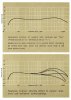
4311 is generically L100, of course, and if that early curve is accurate, it's astounding in several respects, most prominently in that the boomy bass, which virtually everyone can hear as such, amounts to but 2 dB of boost, and the "forward" midrange is only 3 dB up. The combinaton of those two seemingly inconsequential deviations from flat response, plus the obvious rolled-off very high frequencies, becomes "West Coast" sound, which was created to mimick the Altec 604 duplex in nearfield monitoring.

Compare to HPM 100 with 9 dB of mid/high boost, again, assuming the curves we're discussing actually characterize these products.

Everybody say "BOOM, TIZZ," now.... :p:
 
Here's 4310, the actual predecessor control monitor developed to compete with the Altec 604, showing the range of adjustability of the response. It could be dialed 8 dB "Hot," apparently, but not flat. This is the speaker studio engineers were taking home, prompting development of the L100 as a consumer product:

attachment.php


All of this information is available in the Lansing Heritage library.
 

Attachments

  • 4310 FR A.jpg
    4310 FR A.jpg
    70 KB · Views: 659
Wish I could find some info on the range of adjustment for the HPM. Is it safe to assume it is close to the range of the L100's?
I have been playing around with the mid control adjusted down between -3 to -4 on the HPM and it seems to tame the speaker some but have no way to see what the actual curve looks like. Of course you would need a anechoic chamber and that is not something the average consumer has the time or especially the money to invest in.

I'm enjoying the info you're throwing at me. Very interesting indeed. Keep it coming. :yes:

Paul
 
Of course you would need a anechoic chamber and that is not something the average consumer has the time or especially the money to invest in.

Not really. With modern, digital measurement systems you can get a pseudo-anechoic measurement in a fairly acoustically hostile environment. You have to take a couple of measurements, MLS or gated sine sweep for the high end and then a nearfield for the low and splice them together but it's possible to do it just about anywhere these days.

Ray
 
I believe I can make a credible argument that a simple RTA measurement will tell quite a bit, as well. Since it's in-room including reflections, carefully taken, it characterizes more what you're actually hearing as opposed to the performance under ideal conditions.

Here's the curves for HPM-60 from an earlier thread, the top one showing adjustability. This may indicate the kind of range the designer built into the product family. Looks like you have to crank both mid and tweet down to tame it. You can also see why HPM-60 might be preferred over HPM-100 by some listeners:

attachment.php
 
Sounds like maybe the X-overs are tired??

Maybe the caps in the HPM x-overs are getting old? Try recapping and see how they sound? Maybe the drivers aren't coming in at the right freqs or the right rates?
 
Back
Top Bottom