

You are using an out of date browser. It may not display this or other websites correctly.
You should upgrade or use an alternative browser.
You should upgrade or use an alternative browser.
SAS Cantilevers: Boron vs Sapphire vs Ruby
- Thread starter Jim Creek
- Start date

I am a huge fan of the Boron cantilever, they do have a certain sound signature and are exceptional trackers at least the ones I own and have owned. I haven’t owned a Diamond cantilever but would like to just to hear what they’re like.
Audiofrea71
Audiofrea71

i have the SAS Boron on my V15VxMR it sounds wonderful and its my favorite MM i would say out of the 15 or so i have
Decibel_116
AK Subscriber
I have used the boron-cantilevered version of the Jico SAS in a Shure V15IV. It didn't do anything for me. I ended up finding a couple original NOS VN45mr styli and sold the boron SAS. However, when I tried the sapphire-cantilevered SAS for my V15Vmr, I was pleased with the result (but still not overjoyed). I have not compared the sapphire VN45 SAS directly to the boron or ruby. As interesting as these old Shure cartridges may be, I have moved on to other things.
There are other factors that come into play when evaluating a stylus cantilever's material, - such as construction. There's the solid boron rod that is so popular now with the Namiki Micro Ridge diamond pre-installed (a favorite of the retipper community), then there is the thin vapor deposited boron tubes which are much lower in mass. The same goes for sapphire and ruby cantilever material (hollow tubes vs. solid/tapered construction). The point being that when you compare cantilever material, construction must also be considered. Also, if one were to install a solid boron rod stylus into a cartridge designed for a boron tube (or beryllium tube), the resulting cartridge sound will be different due to the increased mass.
None of the SAS styli are close to what the cartridge was originally designed for and will not sound like the original. All this to make a single point that whichever "flavor" of SAS you prefer is simply just that - a preference. It might be interesting to do a direct comparison of the different SAS styli using the IMD measurement tool in AutoMajik to see which version produces the least amount of distortion overall.
There are other factors that come into play when evaluating a stylus cantilever's material, - such as construction. There's the solid boron rod that is so popular now with the Namiki Micro Ridge diamond pre-installed (a favorite of the retipper community), then there is the thin vapor deposited boron tubes which are much lower in mass. The same goes for sapphire and ruby cantilever material (hollow tubes vs. solid/tapered construction). The point being that when you compare cantilever material, construction must also be considered. Also, if one were to install a solid boron rod stylus into a cartridge designed for a boron tube (or beryllium tube), the resulting cartridge sound will be different due to the increased mass.
None of the SAS styli are close to what the cartridge was originally designed for and will not sound like the original. All this to make a single point that whichever "flavor" of SAS you prefer is simply just that - a preference. It might be interesting to do a direct comparison of the different SAS styli using the IMD measurement tool in AutoMajik to see which version produces the least amount of distortion overall.

cafe latte
Addicted Member
The Namiki with micro ridge is solid as you said but very thin indeed, the boron tube was much bigger and yes it was lighter but difference for most was not massive. Ruby is much havier than boron and due to its fragility there is a limit to how thin it can be tube or otherwise. Today boron tube dont exist as far as I am aware so really the only option is the thin boron rod. I have a 205mk3 with original thin boron vapor deposit boron tube cantilever, I also have a sas with boron cantilever, the latter sounds a little better IMO maybe the slightly better stylus tip. The slightly higher moving mass does not seem to be much of a problem. I dont have the numbers but I do wonder how much heavier the rod is as they really are very thin.I have used the boron-cantilevered version of the Jico SAS in a Shure V15IV. It didn't do anything for me. I ended up finding a couple original NOS VN45mr styli and sold the boron SAS. However, when I tried the sapphire-cantilevered SAS for my V15Vmr, I was pleased with the result (but still not overjoyed). I have not compared the sapphire VN45 SAS directly to the boron or ruby. As interesting as these old Shure cartridges may be, I have moved on to other things.
There are other factors that come into play when evaluating a stylus cantilever's material, - such as construction. There's the solid boron rod that is so popular now with the Namiki Micro Ridge diamond pre-installed (a favorite of the retipper community), then there is the thin vapor deposited boron tubes which are much lower in mass. The same goes for sapphire and ruby cantilever material (hollow tubes vs. solid/tapered construction). The point being that when you compare cantilever material, construction must also be considered. Also, if one were to install a solid boron rod stylus into a cartridge designed for a boron tube (or beryllium tube), the resulting cartridge sound will be different due to the increased mass.
None of the SAS styli are close to what the cartridge was originally designed for and will not sound like the original. All this to make a single point that whichever "flavor" of SAS you prefer is simply just that - a preference. It might be interesting to do a direct comparison of the different SAS styli using the IMD measurement tool in AutoMajik to see which version produces the least amount of distortion overall.
Chris
Decibel_116
AK Subscriber
The Namiki with micro ridge is solid as you said but very thin indeed, the boron tube was much bigger and yes it was lighter but difference for most was not massive. Ruby is much havier than boron and due to its fragility there is a limit to how thin it can be tube or otherwise. Today boron tube dont exist as far as I am aware so really the only option is the thin boron rod. I have a 205mk3 with original thin boron vapor deposit boron tube cantilever, I also have a sas with boron cantilever, the latter sounds a little better IMO maybe the slightly better stylus tip. The slightly higher moving mass does not seem to be much of a problem. I dont have the numbers but I do wonder how much heavier the rod is as they really are very thin.
Chris
This is something I have some direct experience with. The boron tube on my Denon DL-305 is tiny. In fact it looks thinner than the boron rods on several of my top end MCs. I can assure you that there is a rather distinctive difference between a boron tube and a boron rod - all things being equal. I can hear it and I have measured the difference in IMD. I have measure the IMD difference between two DL-305s I have in my collection. One is original (boron tube) the other is the Namiki MR boron rod retipped version. They both sound good, but the original tracks difficult passages much better and has better articulation of quick dynamics. The IMD measurements are from between .1 to .5% with the tube, to 4% and higher with the rod. You can also see this in the trackability numbers too. I'm not a retipper (yet) so I do not know if there are any sources for boron tubes in today's market. One thing is for sure, some of the MCs produced in the mid to late '80s had exotic cantilevers with extremely low tip mass resulting in some pretty amazing trackability ratings that are rare if non-existent today. Regardless, Boron is surely one of the better (preferred) materials for cartridge designs - tube or solid.

MRL_Audio
RIP 2022
some of the MCs produced in the mid to late '80s
Now you got me interested. Those I have that have a boron cant are below. I'd be interested in checking out a couple of others though.
---
AT - AT150MLX
Benz Micro - Glider
Denon - DL-103M
Empire - 600-LAC (this is a "boron vapor internally damped aluminium")
Nagaoka - MP-500
Ortofon - MC-200 U
SAE - 1000E
Shelter - 501 II
Sumiko - Blackbird HO
Decibel_116
AK Subscriber
Now you got me interested. Those I have that have a boron cant are below. I'd be interested in checking out a couple of others though.
---
AT - AT150MLX
Benz Micro - Glider
Denon - DL-103M
Empire - 600-LAC (this is a "boron vapor internally damped aluminium")
Nagaoka - MP-500
Ortofon - MC-200 U
SAE - 1000E
Shelter - 501 II
Sumiko - Blackbird HO
The Denon DL-103M is a limited production cartridge with the exotic boron tube cantilever (around 0.168 mg effective tip mass). That is of course if the original has not been replaced with new Namiki boron rod. There are quite of few of those floating around.

ripblade
Addicted Member
My 103M has the usual Denon tapered alloy cantilever. The boron part is the 1 piece armature (coil bobbin and cantilever receiver tube). Boron is black, but the photos online clearly show a silver/grey coloured cantilever. This is not to diminish the efforts of Denon with the 103M. Indeed, it's the only cartridge I'm aware of that uses a boron armature.
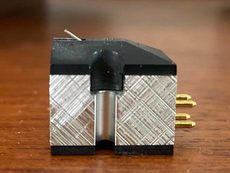
cafe latte
Addicted Member
I wonder if your boron rod is aligned correctly, just wondering as they should be amazing trackers. I will see if I can do a side by side pic with a 205mk3 cantilever and a solid rod.This is something I have some direct experience with. The boron tube on my Denon DL-305 is tiny. In fact it looks thinner than the boron rods on several of my top end MCs. I can assure you that there is a rather distinctive difference between a boron tube and a boron rod - all things being equal. I can hear it and I have measured the difference in IMD. I have measure the IMD difference between two DL-305s I have in my collection. One is original (boron tube) the other is the Namiki MR boron rod retipped version. They both sound good, but the original tracks difficult passages much better and has better articulation of quick dynamics. The IMD measurements are from between .1 to .5% with the tube, to 4% and higher with the rod. You can also see this in the trackability numbers too. I'm not a retipper (yet) so I do not know if there are any sources for boron tubes in today's market. One thing is for sure, some of the MCs produced in the mid to late '80s had exotic cantilevers with extremely low tip mass resulting in some pretty amazing trackability ratings that are rare if non-existent today. Regardless, Boron is surely one of the better (preferred) materials for cartridge designs - tube or solid.
Chris
cafe latte
Addicted Member
Nothing wrong with the stylus fixing IMO as the glue is very very hard and both methods use the glue to hold as the stylus is quite loose in the hole of most carts. Remember too people go on about the large blob of glue on boron rods, but remember the stylus (nude MR) on boron is 0.3mm long and 0.5mm long when the stylus passes through the cantilever like on aluminium or boron tubes (sometimes longer). The diamond is heavy so you are using much less diamond on a boron rod and the glue weighs very little, also remember there is diamond under the glue, if you remove the glue it weighs almost nothing and there is a lot less than you might imagine.I don't think it is so much the mass between rod and tube so much as it is the stylus fixing; the difference between a large blob of glue vs piercing a through hole with a laser using minimal glue, the latter being much more rigid.
Chris
cafe latte
Addicted Member
Here is a couple of pics of a 205cmk3 next to a Namiki boron rod. Glue is similar on both, tip is smaller diamond on Namiki. The boron tube has very thick walls and is clearly much thicker so there won't be much difference in moving mass when the rod is cut to correct length.I wonder if your boron rod is aligned correctly, just wondering as they should be amazing trackers. I will see if I can do a side by side pic with a 205mk3 cantilever and a solid rod.
Chris
Chris
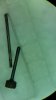
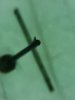
ripblade
Addicted Member
Still, the best cartridges I remember had the boron tube.Here is a couple of pics of a 205cmk3 next to a Namiki boron rod. Glue is similar on both, tip is smaller diamond on Namiki. The boron tube has very thick walls and is clearly much thicker so there won't be much difference in moving mass when the rod is cut to correct length.
ChrisView attachment 2042553 View attachment 2042554
I miss it.
cafe latte
Addicted Member
I spent a lot of time testing the two and little difference IMO maybe setup or stylus, but side by side the two are very similar as I said I prefer the modern Jico version.Still, the best cartridges I remember had the boron tube.
I miss it.
Chris

How many times can you bounce a ruby off a record before it breaks?
That I don't know, as I always lower mine gently.
Decibel_116
AK Subscriber
My 103M has the usual Denon tapered alloy cantilever. The boron part is the 1 piece armature (coil bobbin and cantilever receiver tube). Boron is black, but the photos online clearly show a silver/grey coloured cantilever. This is not to diminish the efforts of Denon with the 103M. Indeed, it's the only cartridge I'm aware of that uses a boron armature.
I may have that one confused another Denon with the boron tube, maybe the DL-1000. I don't have the paperwork on the 103M, just a broken cartridge.
ripblade
Addicted Member
Denon themselves call it a boron cantilever. I guess it depends on what one calls the cantilever; to me it's the part that holds the stylus.I may have that one confused another Denon with the boron tube, maybe the DL-1000. I don't have the paperwork on the 103M, just a broken cartridge.
Decibel_116
AK Subscriber
Here is a couple of pics of a 205cmk3 next to a Namiki boron rod. Glue is similar on both, tip is smaller diamond on Namiki. The boron tube has very thick walls and is clearly much thicker so there won't be much difference in moving mass when the rod is cut to correct length.
ChrisView attachment 2042553 View attachment 2042554
I think you are missing the point. Tube cantilevers were developed, whether it be aluminum alloy, boron, sapphire, ruby, or even beryllium to reduce effective tip mass and increase trackability numbers. They are very successful in meeting this objective. However, you seem to want to argue this point for some reason. I'm not sure why, as this is well-established knowledge in the field you claim to be an expert in. You can only manufacture solid rods so thin before they become too fragile and brittle for use as a stylus cantilever or start introducing parasitic resonances. Tubes provide high strength and rigidity, with much lower mass.
The simple photo comparison you provided (interesting as it may be) means absolutely nothing as far as comparing effective tip mass. I don't see any measurement data or effective mass calculations. Also, that boron tube for the 205cmk3 looks nothing like the DL-305 tube I was describing. The diamond attachment method is different as well. The tip of the DL-305 tube is angle cut to minimize tip mass and utilizes a laser drilled hole so that minimal glue is required to affix the diamond (no glue globs here). The Technics tube looks like the one on my ZYX cartridge - a big stub to mount the diamond to, then slid over a rod. When you make statements like "there won't be much difference in moving mass when the rod is cut to length", without showing how you arrived at that conclusion by using the formula for effective mass, is not a valid conclusion. At least not a conclusion I will buy into without some kind of evidence or measurements. Measurement data please.
It seems that in today's market, we may stuck with the solid boron rod for new products. The days of manufacturing exotic cantilevers and super high trackability numbers are behind us.
cafe latte
Addicted Member
All I was saying, and I know about why tubes are used is the effective mass wont be much different in the example I showed. A tube can offer stiffness far exceeding its weight it is why we use tubes for all sorts of things. I make shooting bipods for example using both titanium and aluminium tubes it is amazing how strong a very thin tube can be. Back to carts this reduces moving mass be it aluminium or boron, but due to boron we need to make a very thick wall due to fragility so we cant reduce the moving mass by much as tube wall needs to be really think as I showed in the picture.I think you are missing the point. Tube cantilevers were developed, whether it be aluminum alloy, boron, sapphire, ruby, or even beryllium to reduce effective tip mass and increase trackability numbers. They are very successful in meeting this objective. However, you seem to want to argue this point for some reason. I'm not sure why, as this is well-established knowledge in the field you claim to be an expert in. You can only manufacture solid rods so thin before they become too fragile and brittle for use as a stylus cantilever or start introducing parasitic resonances. Tubes provide high strength and rigidity, with much lower mass.
The simple photo comparison you provided (interesting as it may be) means absolutely nothing as far as comparing effective tip mass. I don't see any measurement data or effective mass calculations. Also, that boron tube for the 205cmk3 looks nothing like the DL-305 tube I was describing. The diamond attachment method is different as well. The tip of the DL-305 tube is angle cut to minimize tip mass and utilizes a laser drilled hole so that minimal glue is required to affix the diamond (no glue globs here). The Technics tube looks like the one on my ZYX cartridge - a big stub to mount the diamond to, then slid over a rod. When you make statements like "there won't be much difference in moving mass when the rod is cut to length", without showing how you arrived at that conclusion by using the formula for effective mass, is not a valid conclusion. At least not a conclusion I will buy into without some kind of evidence or measurements. Measurement data please.
It seems that in today's market, we may stuck with the solid boron rod for new products. The days of manufacturing exotic cantilevers and super high trackability numbers are behind us.
The solid rod in the pic is thinner than the tube, likely is the stiffness will be similar with both and moving mass similar. With such a thick wall I am not convinced there is much if any advantage over the thick walled tube. If you go to VE the tip mass is listed in the instructions it is very low indeed, actually the 205cmk3 was one of the lowest moving mass carts ever, the 100 was a little lower as was the mk4 but not by much. Anyway as we are talking a stylus of seriously low moving mass my comparison is valid IMO.
Chris
Last edited:
Similar threads


- Replies
- 22
- Views
- 2K
