

You are using an out of date browser. It may not display this or other websites correctly.
You should upgrade or use an alternative browser.
You should upgrade or use an alternative browser.
Wow And Flutter
- Thread starter rlgabe
- Start date
Register to hide this ad

Nice distortion exactly but speed fluctuations. That .27 is very high (not good) and .01 is very respectably low (very good). Which turntables are these?
So which is the best?
Pro-Ject Debut Carbon EVO-
Speed: 33, 45/(78) (electronic speed change) Drive principle: belt drive with electronic speed control Platter: 300mm, 1.7kg heavy steel platter with TPE damping and felt mat Platter bearing: high precision stainless steel axle in bronze bushing Wow & flutter: 33: +/-0,17%; 45: +/-0,15% Speed drift: 33: +/-0,5%; 45: +/-0,6% Signal to noise: 68dB Tonearm: 8,6” one-piece carbon tonearm Effective arm length/mass: 218,5 mm/6,0 g Overhang: 18,5mm Included accessories: 15V DC / 0,8A power supply, dust cover, 78 RPM round belt, 7‘‘ single adapter Power consumption: 4W / 0W standby Dimensions: 415 x 113 x 320mm (WxHxD) Weight: 6 kg net
Elac Miracord 50 -MRC-501
Product Specifications
Turntable Section
 rive System:Belt DriveMotor:
DC MotorSelectable Speeds:33-1/3 and 45 RPMMotor
Servo:Speed Rotation and Servo SystemRotation
Speed Variation:+/- 1%Wow and Flutter:
0.1%Signal-To-Noise Ratio:-67 dB or higher
(A-weighted) -60dB or higher (unweighted)
Platter:Aluminum die-castPlatter Diameter:
0 in / 300 mm
Pro Ject Automat A1
Technical Specifications
Speed: 33, 45 (electronic speed change)
Drive principle: belt drive,
fully automatic
Platter: damped aluminium platter
Wow & flutter: 33: +/-0,27%; 45: +/-0,25%
Speed drift: 33: +/-0,75%; 45: +/-0,65%
Signal to noise: 65dB
Tonearm: ultra-light-mass 8,3”
aluminium tonearm
Effective arm length: 211mm
Overhang: 19,5mm
Included accessories: 15V DC / 0,8A power
supply, dust cover, 7‘‘ single adapter, feltmat,
phono cable
Power consumption: 1,5W
Dimensions: 430 x 130 x 365 mm (WxHxD)
Weight: 5,6 kg net
Last edited:

patient_ot
Super Member
0.10% or less was the old NAB standard. IMHO any turntable that can't manage that isn't fit for use.

Thanks, think I'm going to buy a new Dual. Didn't know they were still in business0.10% or less was the old NAB standard. IMHO any turntable that can't manage that isn't fit for use.
https://hifiheaven.net/shop/Dual-CS...artridge-Open-Box?search=Dual&category_id=137
Thanks!!!!!!!0.27% is very high
0.10% or less was the old NAB standard. IMHO any turntable that can't manage that isn't fit for use.
Think I am going to buy a new Dual. Didn't know they were still in business.I'm looking at two turn tabled to buy. One has a wow and flutter value of 0.27% and the other has a 0.01% Am I correct that the more wow flutter the more distortion?
https://hifiheaven.net/shop/Dual-CS...artridge-Open-Box?search=Dual&category_id=137
patient_ot
Super Member
Think I am going to buy a new Dual. Didn't know they were still in business.
https://hifiheaven.net/shop/Dual-CS...artridge-Open-Box?search=Dual&category_id=137
Well they are, but in name only. Not the same company at all that they were even a few years ago, and certainly not the company they were in the 70s.

One would like to assume that all turntable specs are uniform, but there have always been different weightings (which, while legitimate, give different numbers that can mislead people who don't look at the fine print), and now that turntables are a minority interest, I'm not sure anyone polices such specs. Maybe trust, but certainly verify - listen very carefully for wow and flutter before the warrantee expires.
Late Boomer
Super Member

Smaller number is better, but you cannot compare them without knowing what method has been used to obtain it, and there were many (see the link in my signature).
So, it is 0.1%, not 0.01%, which is unachievable on a real-world turntable. I suppose, it is either JIS or NAB, but there is no indication which one. Also, no indication whether it is weighted or not. Unweighted can be easily three to five times higher than weighted, but since manufacturers like to advertise low numbers, I suppose it is weighted.
The other one, considering "+/-" and comma in decimal, is either DIN or IEC. Should be quasi peak.
If the fluctuations are perfectly sinusoidal, then JIS value would be 0.7 of DIN value. In reality, JIS value can be anywhere between 0.3 and 0.8 of DIN value.
As a rough estimate I usually consider DIN value to be twice higher than JIS, like in your case 0.1% JIS WRMS is about the same as ±0.2% DIN Quasi Peak, so these two turntables are quite close in terms of W&F.
For hi-fi turntables and cassette decks, DIN requires W&F no higher than ±0.2% weighted quasi peak, so ±0.27% does not look very exciting to me, unless it is an unweighted value.
Wow & Flutter: < ±0,1 % (DIN WTD) - this is a respectable number.Thanks, think I'm going to buy a new Dual. Didn't know they were still in business
https://hifiheaven.net/shop/Dual-CS...artridge-Open-Box?search=Dual&category_id=137
Last edited:

This is all written in Japaneese, can you please explain in English???????
Smaller number is better, but you cannot compare them without knowing what method has been used to obtain it, and there were many (see the link in my signature).
So, it is 0.1%, not 0.01%, which is unachievable on a real-world turntable. I suppose, it is either JIS or NAB, but there is no indication which one. Also, no indication whether it is weighted or not. Unweighted can be easily three to five times higher than weighted, but since manufacturers like to advertise low numbers, I suppose it is weighted.
The other one, considering "+/-" and comma in decimal, is either DIN or IEC. Should be quasi peak.
If the fluctuations are perfectly sinusoidal, then JIS value would be 0.7 of DIN value. In reality, JIS value can be anywhere between 0.3 and 0.8 of DIN value.
As a rough estimate I usually consider DIN value to be twice higher than JIS, like in your case 0.1% JIS WRMS is about the same as ±0.2% DIN Quasi Peak, so these two turntables are quite close in terms of W&F.
For hi-fi turntables and cassette decks, DIN requires W&F no higher than ±0.2% weighted quasi peak, so ±0.27% does not look very exciting to me, unless it is an unweighted value.
Wow & Flutter: < ±0,1 % (DIN WTD) - this is a respectable number. Of course, digital will give you

adnick
Addicted Member
As pointed out above the numbers mean very little today because one doesn’t know how the data was collected or what equipment was used. Just one for instance, was this during playback with the needle dropped?
The main point is—there isn’t any organization setting standards that all manufacturers are following and/or meeting
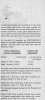
NARTB Standards were just that, a standard methodology with specific equipment and when one reads the documentation (Recording & Playback) it specifies a spread of .2 — .4 W&F Assuming this spread was because it included tape mediums…
Turntable manufacturers of that period meet and/or exceeded the .2 W&F standard, below is a Fairchild add which outlines the standard:

The main point is—there isn’t any organization setting standards that all manufacturers are following and/or meeting
NARTB Standards were just that, a standard methodology with specific equipment and when one reads the documentation (Recording & Playback) it specifies a spread of .2 — .4 W&F Assuming this spread was because it included tape mediums…
Turntable manufacturers of that period meet and/or exceeded the .2 W&F standard, below is a Fairchild add which outlines the standard:
Late Boomer
Super Member
This is the best I can do to explain it in written English: wow & flutter explained.This is all written in Japaneese, can you please explain in English???????
TL;DR: 0.1% JIS WRMS is about the same as ±0.2% DIN, and is sufficient to consider the machine good enough for "hi-fi" moniker, although hardcore audiophiles strive for smaller numbers.
IMHO, it is less important for vinyl than for cassette, because with cassette, wobble is added when you record and then when you play. With LP you only play.
Last edited:

lini
just me...
If they really had 0.27 RMS w&f, it would sound so bad that anyone buying one would feel ripped off, so I somehow suspect it is peak to peak values.
Actually, those 0.27 % and 0.25 % values don't seem so unlikely. Because the Automat A1 basically is a variant of the discontinued Dual CS415-2 and made for Pro-Ject formerly by Fehrenbacher, now by Abundantia (which took over, after Fehrenbacher went insolvent this year) - and most probably it still sports that lousy drive variant with the fixed spindle, that doesn't turn with the platter, so that the record may rub against that, hence causing quite inacceptable wow & flutter. In one word: Avoid!
Greetings from Munich!
Manfred / lini
Late Boomer
Super Member
They are not RMS.Those project turntables likely are fine, it's hard to understand exactly what those specs mean. If they really had 0.27 RMS w&f, it would sound so bad that anyone buying one would feel ripped off, so I somehow suspect it is peak to peak values.

maxhifi
Addicted Member
Actually, those 0.27 % and 0.25 % values don't seem so unlikely. Because the Automat A1 basically is a variant of the discontinued Dual CS415-2 and made for Pro-Ject formerly by Fehrenbacher, now by Abundantia (which took over, after Fehrenbacher went insolvent this year) - and most probably it still sports that lousy drive variant with the fixed spindle, that doesn't turn with the platter, so that the record may rub against that, hence causing quite inacceptable wow & flutter. In one word: Avoid!
Greetings from Munich!
Manfred / lini
Strange design! This one of the very plastic intensive machines, right?

RDW
Well-Known Member
Unfortunately the Fluance turntables also have a fixed spindle and I hate it. Why would anybody think that is a good thing?and most probably it still sports that lousy drive variant with the fixed spindle, that doesn't turn with the platter, so that the record may rub against that, hence causing quite inacceptable wow & flutter. In one word: Avoid!
Greetings from Munich!
Manfred / lini
Similar threads
- Replies
- 74
- Views
- 14K


