

You are using an out of date browser. It may not display this or other websites correctly.
You should upgrade or use an alternative browser.
You should upgrade or use an alternative browser.
Tube Power Supplies a Different Approach!
- Thread starter SET12
- Start date

jaymanaa
RIP 1961-2018
Hmm, I didn't notice any naysayers.:scratch2: I'm a student of the Pakprotector power supply school, and many things SET is doing are very similar. I think power supplies can be very personal though. I have my ideas and practices, and it would be very hard to talk me out of them.:yes:

SET12
Super Member
All I can add is if you nay sayers could hear SET's system you'd understand.
Thanks Dave

I got no problem with what Set likes, I just have a different approach and understanding, to each there own.
Right on Kegger :yes:
Hmm, I didn't notice any naysayers.:scratch2: I'm a student of the Pakprotector power supply school, and many things SET is doing are very similar. I think power supplies can be very personal though. I have my ideas and practices, and it would be very hard to talk me out of them.:yes:
Thanks Jay :thmbsp:
Its over on Asylum the Doctor, that denewma04 is referring to, I believe. Doctor Low Mu has a number of detractors there that are pretty upset. And since some of my thoughts parallel his. I'm guessing perhaps I'm considered one of his followers unless otherwise!
The thing is as Jay say's we are students of someone or something "Radiotron Manual" which has inspired us or we learned from. For me it was a couple students of Doctor Low Mu's, Herb Reichert and J.C. Morrison and their writings in Sound Practices Magazine that was a strong influence for me.
Cheers
SET12
Last edited:

Hi,
You are correct in that the power supply will stiffen up without that resistor in there. But this is only going to have a real big impact in amps that are biased below 3/4 of maximum output tube plate dissipation. I tried it in amps I build and no effect. But my amps are biased such that at idle, the plate dissipation is at maximum (25 watts for each EL34 in the push pull designs). I actually have two RC filter networks before the B+ goes to the output transformer. I run about 100uf off the 5U4 with a 20 ohm resistor between the 5U4, then a 40 ohm and another 100uf and finally another 40 ohms with another 100uf capacitor before the B+ goes to the output transformer. On SET amps using two 2A3's in SET parallel, I have a 5U4 running into a 20 ohm resistor and then a 200 uf capacitor,t hen a 5 hy choke followed by a 300 uf capacitor, then a 40 ohm resistor followed by 400uf capacitor. Ripple is around 10 Mv at the point where the output transformer connects to the power supply.
I did an extensive A/B test of my amps against an Audio Aero Capitole and both myself and the owner of the Capitole found that the performance of my amps held it's own against the Capitole in all areas but brute power (The Capitole is a push pull parallel 'simulclass design' delivering a rock solid 50 watts from a pair of EL34's paralleled with a pair of 6550's). So, a lot has to do with how the amp is biased and the type of dynamic load it presents to the power supply as to whether or not you will see an improvement if you bypass those power supply resistors in the RC filter networks. In my amps, it makes no difference. In class AB2 or even some AB1 designs, it could have quite an impact on power supply sag and the overall dynamics of the amp.
If you really want a solid power supply, try using a solid state rectifier with a choke input filter network.
SET12
Super Member
Hearing versions of both, I know I've tended to prefer PSUs with more filtration to less. I would imagine SET12s system sounds just the way he wants it.
dnewma04,
Thank You!
Yes, I'm pretty satisfied, but there is more yet to get out of it :scratch2: I haven't done everything that I would like to be done or could be done.
I have run into people who think that everything with valve technology has been done and there are no more patents left to get and tubes is tubes!
Tell that to Bruce Rozenblit of Transcendent Sound he certainly doesn't like to hear that! He recieved an OTL patent a number of yrs back.
Look at the Russians,who took vacuum tube technology to another level 10 yrs beyond the U.S..
As to supply noise, I believe everyone has their tolerance certainly.
One can have a clean supply, but that doesn't equate performance in all areas by any means!
And I'm not saying one has to have a dirty supply to have performance.
I am saying ultra clean supplies often make for sterile sounding amplifiers but they can be clean and don't have to be sterile from high DCR's of course high feedback levels can accomplish that as well!
Dynamic expression means a lot to me! more so than any level of noise within my tolerance range.
If you have two chokes that are the same effective Henry or ACR value the one with the lowest DCR value say 25 ohms vs one with 1-200 ohms DCR is going to sound superior dynamically for the most part IMO,
But I think if ones system doesn't have dynamic expression capacity then one would have a diminishing return on using a low DCR choke.
Also I can see where certainly someone listening to classical with very low recorded levels wouldn't have much tolerance for any noise intruding into the musical experience.
In my system my amps have noise mostly produced from the 4 amp heaters of my 811's, there's a trick or two I have yet to try.
Even with a bit of hum that I hear from my amps my system with my last mods to my CDP amazed me, by very easily resolving various analog master tapes textures being from coarse to fine. IMO thats a lot of resolve. But then again I don't use a preamp as all but the finest just get in the way of transparency and resolve. Or should I say I can't afford the 5 or $10,000 preamps I have liked.
My friend Don with the EL84 PP amp listens to a lot of classical and Jazz wasn't in the least bothered by having having the output stage directly connected to the rectifier.
Though he doesn't own high efficiency speakers either, but I do and there wasn't any complaints of noisiness when he listened to his amp on my system.
My friend Don owns a $5000 BelCanto 845 amp. It is one of the best sounding 845 amps that I have heard. I brought over a recording the had some very fast piano work that was very dynamically intense on my system with my amps! But I found IMO sounded somewhat subdued on his,cost of his preamp and power amp is a cool $10,000. The only thing I could figure was his chokes DCR! Mine of which I have nothing but diodes in the supply path is nil! Boy did I like the piano better with my amps.
I think Dave Conrad has gotten some excellent results from his 300B mono-block supplies with just 13 ohm's DCR for his power transformer and 26 ohms for his 5H chokes and his amps are pretty quite.
But what I really want to talk about is what I did with my all tube phono stage 66db of tube gain which was designed to compete with $10,000 phono stages and that my friends is quite.
With no chokes and no resistors in the supply path!
Cheers
And more to come :thmbsp:
SET12
Last edited:
jaymanaa
RIP 1961-2018
My thinking is that vacuum tube technology got cut off by transistors just when it was really starting to take off. They were just starting to do some cool stuff with compactrons, like add caps and resistors to the inside stuff. The other thing is, that 90% of all commercial (and most home brew) amps are one of three or four basic designs. This is part of what makes tubes so much fun to experiment with to this day. Thinking outside the box is very easy to do, and sometimes gives surprisingly positive results.:yes:
SET12
Super Member
My thinking is that vacuum tube technology got cut off by transistors just when it was really starting to take off. They were just starting to do some cool stuff with compactrons, like add caps and resistors to the inside stuff. The other thing is, that 90% of all commercial (and most home brew) amps are one of three or four basic designs. This is part of what makes tubes so much fun to experiment with to this day. Thinking outside the box is very easy to do, and sometimes gives surprisingly positive results.:yes:
Well put Jay :thmbsp:
As I said, I will be going into some of that "thinking out of the box" with my phono project.
Although I would like to make some comments on seta1 comments first which was not my experience at all!
SET12

Dave C
Super Member
SET is correct, My 300B power supplies are dead quiet. I have to also say I love the sound of those mono blocks a lot. I would like to use the same power supply (voltage adjusted) on my next project as well. I want to build a single ended 7591 amp in the same fashion as my 300B's I have a couple of Pilot amps I need to look at first though.
SET12
Super Member
A 100 Ohm's of resistance in a Supply path
Thank You seta1,
There's a lot in this opinion so I'm going to make some comments piece by piece here.
First off I'd like to say to all is, seta1 is certainly entitled to his opinion and he certainly has a lot of experience but his experience does not parallel mine at all
Thats a first time I have heard that! The plates on the EL84 that I heard might of been running at 85% of its dissipation.
With my own amps I can use two tubes the 811-10 and the 572-10 both tubes run in Class A2.
The 811-10 runs at about 50 watts dissipation, it has a 65 watt plate dissipation.
The 572-10 runs about 60 watts dissipation and has a 125 watt plate dissipation.
The 572 sounds more extended in the frequency extremes but only slightly.
The 811 is smoother I think cause it has a metal plate vs a graphite for the 572.
The differences in dynamics are more likely because of current use IMO and the 572 has a 20% lower plate resistance as well this gives more transconductance for the same gain which is nearly identical.
Also Dynamic Conductance is Gm X Load, Gm is directly proportional to current. Its current that generates dynamic impact. Its a very important concept for generating dynamics.
Its not all of the story but its a good chunk.
The other part of the story is loading.
Its what makes good current sources like the C4S that I use from bottle head in the front of my amps really work!
Here http://www.bottlehead.com/et/parts/parts.htm
Scroll about 2/3 down and you'll see the kit.
The C4S is also great for phono circuits not only generating dynamics but tremendously reducing noise as well! It does so by creating up to a 5 mega ohm load! The noise ends up over the current source! instead of the tube!
I learned a lot from this book and I highly recommend it as it will give far greater information on operating specs of tubes than most tube manual's it only covers signal tubes but the same theory applies to power tubes
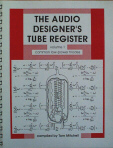
Here's one source for it.
http://www.john-a-harper.com/valvebooks/valve_ref.htm
If I hear it in an EL84 I believe I will hear in others I have no idea what the rest of your system is but it could be an influence!, Its the next item that's severely limiting IMO.
"A 100 ohms!"
The Pilot I redesigned has just as much capacitance being used with a GZ37 a directly heated rectifier as well.
Another factor here maybe the dynamic conductance being higher with EL84s than EL34's like 10-15 for an EL34 PP and 20-25 for an EL84 I didn't think of this until just now! and the gain in the output stage being 23 vs an EL34 maybe 8-10!
All I can tell you is that, when I bypassed that 100 ohm on my friend Don's amp whose ears I trust far more than most peoples he turned his head slowly and looked me in the eyes and said.
"If it gets any better I'm going to creme my pant's"
This was on his ProAc Response II's a pair of $3000 mini monitors that were fast quick and had great bass response as well! Later he got a pair of Dunlevy 4's.
It wasn't subtle folks With the PP EL84 that I worked with! Not to his ears nor mine.
This is a guy that was formally a musician and typically goes out and listens to live Jazz, Big Band and Classical concerts 3-4 nights a week and I can assure you he doesn't exaggerate sound nor does he miss a beat.
Funny, often when I'm out with him he'll say "did you hear that!" then he'll explain with a smile how someone was out of sync in one way or another.
I feel very fortunate that I have him as a reference pair of ears. When I was designing phono stages it took me about 3 yrs before he gave the nod before I beat a good SS MC Phono Stage he was using. I can't tell you how many times I put my head down with him saying
You'd think a 20 watt Pilot would crap out on a pair of Dunlevy 4's! Not this one!
Nothing was flabby, slow or undefined especially in the bass! Dunlevy 4's have some of the best bass pitch definition I have ever heard.
I remember Don telling me he was a little concern about the Pilot driving the Dunlevy's as the minimum recommended power people were talking about using was no less than 100/watts channel!
His concern settled after one LP cut! From his Linn, Aro, and Benz MC
I remember him saying jokingly to me! "I thought tube amps weren't suppose to have bass?"
I said thats what some people say!
Talk about tuneful!
I honestly believe it was all about energy transfer! If not the Dunlevy's would of told us! IMO
Wow, I couldn't live that!
The contrast between your amp and by mono's is like John Kennedy's PT boat vs the Cruiser that ran his boat over and my amps aren't the PT boat here! Now try to imagine the Cruiser only with PT boat speed.
If the output and driver stages are running on caps that big. Thats not a very fast time constant. I run on two 40 uf AEONs for the output stage and a single 40uf AEON for the driver stage both of which are highly isolated from the rest of the supply thats wher my speed comes from!
The foundation of the amplifier is the energy reserves of the bulk electrolytics that I use!
Now here's the key! The PP cap signature is totally intact using diodes to isolate from the rest of the supply. Even the signature of the diodes is not apparent at all.
I'll explain more when I go over my phono supply.
I wonder what the DCR was on the choke?
We could be easily talking in excess of 100 ohms here in the supply path total! Bad news IMO.
IMO its better to use small L's with 5 or 6 ohms like a 500 mH choke and do an LCLCLC But I would prefer CLCLC so I could keep the power transformers windings to a minimum DCR as you need a higher AC secondary to do an LC which of course has more windings for a higher DCR cause your lucky to get 85% of the secondaries AC voltage as DC vs 120-130% with capacitor input from a tube rectifier and of course this can change with various rectifiers.
And if I were using a 5U4 perhaps use a resistor for limiting in a CLCLC and use a timed relay to short the resistor out that way arc over would be prevented in 5U4.
A friend in my local club owned one of Audio Aero's CDP's very,very nice IMO.
Their CDP's maybe great but that doesn't automatically mean their amps are in the same class!
I can't tell you how many High End names I was disappointed in when there was high expectation. But thats true for anyone!
I loved it when a dealer told me if you like a manufactures amps you'll love their phono stages! Not necessarily!
But you know I wasn't there and I have now idea what their topology is.
But it seems to me it must be similar to your own! if they held neck and neck.
I'd almost bet its a classical designed supply.
One amp line that isn't designed in a classical approach that I have heard is Art Audio. Very fine indeed!
I certainly hear it in my SET amps people are often a little amazed at 10 watts. As my bother was being in construction after I told him it was the neighbor calling to tell me her pictures were moving on here walls separated by two garages between here living room and mine I was just play some Jazz I said!
I have been asked "how can those things do that?" Simply, by design! I have said.
As I said in mine it does!
I don't know what to tell you, I don't know what speakers or source components you use and we have no schematics not much to go by.
By having a fast supply and supply path along with very good parts quality I have found in my experience everything else usually falls into place. Providing the associated parts are voiced for the system and of course the rest of the system is up to the same standard.
Sag, 200 joules 1920uf's/ mono block, hardly!
Though I have heard a few good sounding amps with SS rectifiers, I use them if I feel the need but in general I prefer tubes for harmonic structure.
Now whats interesting is how Art Audio uses SS rectifiers then puts a tube rectifier after it! All in the name of sound! And very good I might add.
Thanks again for your input seta1!
Cheers SET12
Thank You seta1,
There's a lot in this opinion so I'm going to make some comments piece by piece here.
First off I'd like to say to all is, seta1 is certainly entitled to his opinion and he certainly has a lot of experience but his experience does not parallel mine at all
Hi,
You are correct in that the power supply will stiffen up without that resistor in there. But this is only going to have a real big impact in amps that are biased below 3/4 of maximum output tube plate dissipation.
Thats a first time I have heard that! The plates on the EL84 that I heard might of been running at 85% of its dissipation.
With my own amps I can use two tubes the 811-10 and the 572-10 both tubes run in Class A2.
The 811-10 runs at about 50 watts dissipation, it has a 65 watt plate dissipation.
The 572-10 runs about 60 watts dissipation and has a 125 watt plate dissipation.
The 572 sounds more extended in the frequency extremes but only slightly.
The 811 is smoother I think cause it has a metal plate vs a graphite for the 572.
The differences in dynamics are more likely because of current use IMO and the 572 has a 20% lower plate resistance as well this gives more transconductance for the same gain which is nearly identical.
Also Dynamic Conductance is Gm X Load, Gm is directly proportional to current. Its current that generates dynamic impact. Its a very important concept for generating dynamics.
Its not all of the story but its a good chunk.
The other part of the story is loading.
Its what makes good current sources like the C4S that I use from bottle head in the front of my amps really work!
Here http://www.bottlehead.com/et/parts/parts.htm
Scroll about 2/3 down and you'll see the kit.
The C4S is also great for phono circuits not only generating dynamics but tremendously reducing noise as well! It does so by creating up to a 5 mega ohm load! The noise ends up over the current source! instead of the tube!
I learned a lot from this book and I highly recommend it as it will give far greater information on operating specs of tubes than most tube manual's it only covers signal tubes but the same theory applies to power tubes
Here's one source for it.
http://www.john-a-harper.com/valvebooks/valve_ref.htm
I tried it in amps I build and no effect. But my amps are biased such that at idle, the plate dissipation is at maximum (25 watts for each EL34 in the push pull designs).
If I hear it in an EL84 I believe I will hear in others I have no idea what the rest of your system is but it could be an influence!, Its the next item that's severely limiting IMO.
I actually have two RC filter networks before the B+ goes to the output transformer. I run about 100uf off the 5U4 with a 20 ohm resistor between the 5U4, then a 40 ohm and another 100uf and finally another 40 ohms with another 100uf capacitor before the B+ goes to the output transformer.
"A 100 ohms!"
The Pilot I redesigned has just as much capacitance being used with a GZ37 a directly heated rectifier as well.
Another factor here maybe the dynamic conductance being higher with EL84s than EL34's like 10-15 for an EL34 PP and 20-25 for an EL84 I didn't think of this until just now! and the gain in the output stage being 23 vs an EL34 maybe 8-10!
All I can tell you is that, when I bypassed that 100 ohm on my friend Don's amp whose ears I trust far more than most peoples he turned his head slowly and looked me in the eyes and said.
"If it gets any better I'm going to creme my pant's"
This was on his ProAc Response II's a pair of $3000 mini monitors that were fast quick and had great bass response as well! Later he got a pair of Dunlevy 4's.
It wasn't subtle folks With the PP EL84 that I worked with! Not to his ears nor mine.
This is a guy that was formally a musician and typically goes out and listens to live Jazz, Big Band and Classical concerts 3-4 nights a week and I can assure you he doesn't exaggerate sound nor does he miss a beat.
Funny, often when I'm out with him he'll say "did you hear that!" then he'll explain with a smile how someone was out of sync in one way or another.
I feel very fortunate that I have him as a reference pair of ears. When I was designing phono stages it took me about 3 yrs before he gave the nod before I beat a good SS MC Phono Stage he was using. I can't tell you how many times I put my head down with him saying
You'd think a 20 watt Pilot would crap out on a pair of Dunlevy 4's! Not this one!
Nothing was flabby, slow or undefined especially in the bass! Dunlevy 4's have some of the best bass pitch definition I have ever heard.
I remember Don telling me he was a little concern about the Pilot driving the Dunlevy's as the minimum recommended power people were talking about using was no less than 100/watts channel!
His concern settled after one LP cut! From his Linn, Aro, and Benz MC
I remember him saying jokingly to me! "I thought tube amps weren't suppose to have bass?"
I said thats what some people say!
Talk about tuneful!
I honestly believe it was all about energy transfer! If not the Dunlevy's would of told us! IMO
On SET amps using two 2A3's in SET parallel, I have a 5U4 running into a 20 ohm resistor and then a 200 uf capacitor,t hen a 5 hy choke followed by a 300 uf capacitor, then a 40 ohm resistor followed by 400uf capacitor. Ripple is around 10 Mv at the point where the output transformer connects to the power supply.
Wow, I couldn't live that!
The contrast between your amp and by mono's is like John Kennedy's PT boat vs the Cruiser that ran his boat over and my amps aren't the PT boat here! Now try to imagine the Cruiser only with PT boat speed.
If the output and driver stages are running on caps that big. Thats not a very fast time constant. I run on two 40 uf AEONs for the output stage and a single 40uf AEON for the driver stage both of which are highly isolated from the rest of the supply thats wher my speed comes from!
The foundation of the amplifier is the energy reserves of the bulk electrolytics that I use!
Now here's the key! The PP cap signature is totally intact using diodes to isolate from the rest of the supply. Even the signature of the diodes is not apparent at all.
I'll explain more when I go over my phono supply.
I wonder what the DCR was on the choke?
We could be easily talking in excess of 100 ohms here in the supply path total! Bad news IMO.
IMO its better to use small L's with 5 or 6 ohms like a 500 mH choke and do an LCLCLC But I would prefer CLCLC so I could keep the power transformers windings to a minimum DCR as you need a higher AC secondary to do an LC which of course has more windings for a higher DCR cause your lucky to get 85% of the secondaries AC voltage as DC vs 120-130% with capacitor input from a tube rectifier and of course this can change with various rectifiers.
And if I were using a 5U4 perhaps use a resistor for limiting in a CLCLC and use a timed relay to short the resistor out that way arc over would be prevented in 5U4.
I did an extensive A/B test of my amps against an Audio Aero Capitole and both myself and the owner of the Capitole found that the performance of my amps held it's own against the Capitole in all areas but brute power (The Capitole is a push pull parallel 'simulclass design' delivering a rock solid 50 watts from a pair of EL34's paralleled with a pair of 6550's).
A friend in my local club owned one of Audio Aero's CDP's very,very nice IMO.
Their CDP's maybe great but that doesn't automatically mean their amps are in the same class!
I can't tell you how many High End names I was disappointed in when there was high expectation. But thats true for anyone!
I loved it when a dealer told me if you like a manufactures amps you'll love their phono stages! Not necessarily!
But you know I wasn't there and I have now idea what their topology is.
But it seems to me it must be similar to your own! if they held neck and neck.
I'd almost bet its a classical designed supply.
One amp line that isn't designed in a classical approach that I have heard is Art Audio. Very fine indeed!
So, a lot has to do with how the amp is biased and the type of dynamic load it presents to the power supply as to whether or not you will see an improvement if you bypass those power supply resistors in the RC filter networks.
I certainly hear it in my SET amps people are often a little amazed at 10 watts. As my bother was being in construction after I told him it was the neighbor calling to tell me her pictures were moving on here walls separated by two garages between here living room and mine I was just play some Jazz I said!
I have been asked "how can those things do that?" Simply, by design! I have said.
In my amps, it makes no difference.
As I said in mine it does!
I don't know what to tell you, I don't know what speakers or source components you use and we have no schematics not much to go by.
In class AB2 or even some AB1 designs, it could have quite an impact on power supply sag and the overall dynamics of the amp.
By having a fast supply and supply path along with very good parts quality I have found in my experience everything else usually falls into place. Providing the associated parts are voiced for the system and of course the rest of the system is up to the same standard.
Sag, 200 joules 1920uf's/ mono block, hardly!
If you really want a solid power supply, try using a solid state rectifier with a choke input filter network.
Though I have heard a few good sounding amps with SS rectifiers, I use them if I feel the need but in general I prefer tubes for harmonic structure.
Now whats interesting is how Art Audio uses SS rectifiers then puts a tube rectifier after it! All in the name of sound! And very good I might add.
Thanks again for your input seta1!
Cheers SET12
Last edited:

Kegger
R.I.P. 1/12/1966 - 6/1/2017
Only issue I keep having with your Pilot analogy and it's response is when you bypassed
that resistor not only did it remove resistance from the supply the voltage went up here
to, so while the resistance may have been a factor the increased voltage certainly could
have as well, both 6V6 and EL84 respond quite noticeably from increased voltage.
Again I am not saying your approach doesn't work for you but the Pilot amp is not a good
example to use with just clipping out this resistor is all I'm saying because of the voltages.
(to many other possible variables not accounted for)
Kegger
R.I.P. 1/12/1966 - 6/1/2017
I did it with a preamp, I was quite surprised the best "sounding" supply wasn't the best
technical or well thought one with great parts, it used a small oil cap on the input, then
a large RC stage with like a 6.8k resistor an 330uf electrolytic cap out to the pre.
Not saying this is the same as an amp but I was quite surprised it was the best of the 3.
technical or well thought one with great parts, it used a small oil cap on the input, then
a large RC stage with like a 6.8k resistor an 330uf electrolytic cap out to the pre.
Not saying this is the same as an amp but I was quite surprised it was the best of the 3.
SET12
Super Member
Only issue I keep having with your Pilot analogy and it's response is when you bypassed
that resistor not only did it remove resistance from the supply the voltage went up here
to, so while the resistance may have been a factor the increased voltage certainly could
have as well, both 6V6 and EL84 respond quite noticeably from increased voltage.
Again I am not saying your approach doesn't work for you but the Pilot amp is not a good
example to use with just clipping out this resistor is all I'm saying because of the voltages.
(to many other possible variables not accounted for)
12 volts is hardly a real change IMO. A 10 volt line voltage will change more than that! And besides I bet that's 1-2-3 ma.at best.
What we heard was not subtle at all especially with inefficient ProAc Response Two's
Other variables such as?
SET12
Kegger
R.I.P. 1/12/1966 - 6/1/2017
All I can tell you is a 5v change in a EL84 or 6V6 can and at times has had a giant difference in sound. (just did it a week ago)
(so for me the clipping of that resistor does not make the pilot amp a good example) (these tubes like increased voltage a lot)
(now it's within reason the voltage increase, more noticeable at the low end and less at the high end of the scale as well here)
Variables would have to be the same on each supply, same capacitance, same voltage, same power tranny, same rectifier and
the same stages of filtering, unfortunately you can't get that same voltage with the same power tranny with and without that
resistor in there, so as I said, to many other variables to just say it was the less resistance that made that huge impact there.
(the power supply voltage went up as a whole, including the voltage to the driver tubes, which would have an impact here to)
Again
I'm not saying what your doing isn't working for you, but the Pilot example just doesn't cut it for me.
jaymanaa
RIP 1961-2018
Could you run the amp with the resistor, record the B+ voltage, then clip the resistor and run the amp on a variac to get the same B+? Would that be a better test? All this talk about tubes liking higher voltages has me thinking about 6CA7s. They are rated at 800volts (plate), and most amps barely run them at half that. ??:scratch2:
jaymanaa
RIP 1961-2018
You could, Jay. But you might have to have a separate PSU for your heaters if the drop is significant.
Yep, and this is the problem with "most" mods. It's very hard to A/B stuff. I mean, how many people have configured an amp with a switch to change between Riken or Allen Bradly resistors, so they could be properly A/Bd? Nobody that I know of.
 I guess that why shiny stuff sells so good to mod freeks. It seems like the longer I'm in this hobby, the less shiny stuff I'm buying.