

You are using an out of date browser. It may not display this or other websites correctly.
You should upgrade or use an alternative browser.
You should upgrade or use an alternative browser.
Let's see your cans!
- Thread starter cmb3366
- Start date


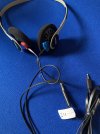

Oops, wrong thread.
Last edited:

juliet lima
Well-Known Member
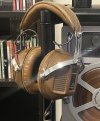
From 1975….the venerable DH-12XF-S Dynamic Stereo Headphones.
These baby’s boast individual volume controls and are 8 ohms. Manufactured by Deltek/Hosiden these are the totl cosmetic option for this model.
Seriously though, they are toast sonically and at that I’m pretty sure they never sounded very good to begin with….but I like the way they look.


melofelo
Addicted Member
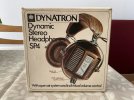
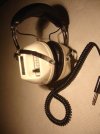
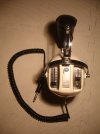
Recently acquired Ross RE-255. Ross Electrical having made some half decent headphones right up until 1980 is on this side of the pond. The earcups are very similar to the Dynatron SP4 ( which look identical to the brown ones above, both of which are closed back instead).
Probably all from the same factory in Japan but branded tailored to the distrbutor's specs ?.
I love the way they look though...will go well with a Pifco 983 turntable lamp I have (by Pierre Cardin) from around the same era and a Philips GA 212
Probably all from the same factory in Japan but branded tailored to the distrbutor's specs ?.
I love the way they look though...will go well with a Pifco 983 turntable lamp I have (by Pierre Cardin) from around the same era and a Philips GA 212
Attachments


melofelo
Addicted Member
Just scored some vintage Sony DR-15. Circa 1976 I believe.
Probably one of their nicest looking vintage cans ?
Not sure if the headband is genuine leather but they look pretty realistic if they are not.
The stitching is the tidiest I've seen on anything from this era.
They don't sound too shabby either.
Hi-Fi Year Book 1976 Original Specs:
20hz-20khz ( not sure if they go that low in the bass if I'm honest)
4-16 ohms
Weight 350gm
Distortion 0.8% ( 500hz, 101dB )
£14.77p ( plus VAT) when new
Probably one of their nicest looking vintage cans ?
Not sure if the headband is genuine leather but they look pretty realistic if they are not.
The stitching is the tidiest I've seen on anything from this era.
They don't sound too shabby either.
Hi-Fi Year Book 1976 Original Specs:
20hz-20khz ( not sure if they go that low in the bass if I'm honest)
4-16 ohms
Weight 350gm
Distortion 0.8% ( 500hz, 101dB )
£14.77p ( plus VAT) when new
Attachments


Nice score! Very low impedance for the era?Just scored some vintage Sony DR-15. Circa 1976 I believe.
Probably one of their nicest looking vintage cans ?
Not sure if the headband is genuine leather but they look pretty realistic if they are not.
The stitching is the tidiest I've seen on anything from this era.
They don't sound too shabby either.
Hi-Fi Year Book 1976 Original Specs:
20hz-20khz ( not sure if they go that low in the bass if I'm honest)
4-16 ohms
Weight 350gm
Distortion 0.8% ( 500hz, 101dB )
£14.77p ( plus VAT) when new
melofelo
Addicted Member
Indeed, I think quite a few early 70s cans were 8 ohms or thereabouts. These are relatively easy to drive from an amplifier's headphone socket though. I've been researching early 'Stereophones' from around 1969 to the late 70s using the online HI-FI Yearbook.Nice score! Very low impedance for the era?
Link here : https://worldradiohistory.com/UK/Hi-Fi-Year-Book/
I could be wrong , but, I suspect these were one of Sony's earliest 'open back' cans. They sound quite nice actually once you get used to their frequency response. They are a sonic step forward from their earlier 1974 DR-4C which were closed back *on ear* 10K impedance (!) with a tad more bass detail although they don't go that deep by even 80s standards.
I suspect they have a traditional paper coned speaker inside but I'm not sure.
Maybe Sony took a page out of Sennheiser's successful HD-414 from a few years earlier and decided to try adding a bit more spaciousness to the sound to get away from the closed back designs of the era ?
Either way , the build quality is lovely on these.
Last edited:
melofelo
Addicted Member
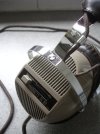
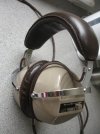
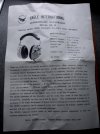
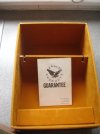
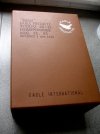
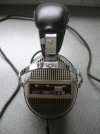
New to me... I present the Eagle International S.E. 80 Deluxe !
I think these date to 1972.
70s Brown everywhere..including the jack plug.
Vented Open back Ear cups being the innovation on offer.
Probably yet another manufacturer conceding a reluctant nod to the Sennheiser HD-414 that were selling like hot cakes.

I think these date to 1972.
70s Brown everywhere..including the jack plug.
Vented Open back Ear cups being the innovation on offer.
Probably yet another manufacturer conceding a reluctant nod to the Sennheiser HD-414 that were selling like hot cakes.
Attachments


Last edited:


Fostex "T60-Rp"


BilboBaggins
Addicted Member
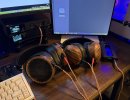
Here are a couple of my cans. I also have a very vintage Koss(?) set with foam earpads that have been replaced a number of times, and I have another of unknown type I lent to my son. Not really expecting it back.


I notice it says "two-way". Does that imply imply there are 2 drivers in each cup. woofer and tweeter? Must have been difficult to implement...Indeed, I think quite a few early 70s cans were 8 ohms or thereabouts. These are relatively easy to drive from an amplifier's headphone socket though. I've been researching early 'Stereophones' from around 1969 to the late 70s using the online HI-FI Yearbook.
Link here : https://worldradiohistory.com/UK/Hi-Fi-Year-Book/Thanks for the links, very interesting perspective in there.
Which goes to prove thank impedance values did not overly bother Receiver manufacturers whose appliances could, for the most part, accommodate a wide array of electrical resistance since most phones were powered by super-dampened resistor-padded circuits producing more power than even a 10k-ohm speaker couldn't handle on its own and therefore response-shaping had to be use to some degree resulting either in muffling or underdamping which with low-impedance cans could at time produce some of the most horrible mids ever heard on this planet, according to contemporary chroniclers and which should be taken with a 5-lbs bag of salt. Mainstream audio equipment such as Pioneer, Kenwood, Sansui, etc. saw the era coming where Chinese-made dedicated headphone amps of more than decent quality would require much stricter tolerances capped between 18 and 600 ohms, no discussion allowed. The signal from an headphone amp is fed to the receiving end with minimal damping for the sake of a level of clarity (or in some cases a level of distortion unfortunately) rarely heard in the West. I for one find no reason to complain about it since the rise of one of my favorite brand of headphones, namely HiFiMan was founded just in time to take advantage of the new situation and finally making planars that regular consumers could afford. 'nuf said about it, the rest is history.I could be wrong , but, I suspect these were one of Sony's earliest 'open back' cans. They sound quite nice actually once you get used to their frequency response. They are a sonic step forward from their earlier 1974 DR-4C which were closed back *on ear* 10K impedance (!)
with a tad more bass detail although they don't go that deep by even 80s standards.
I suspect they have a traditional paper coned speaker inside but I'm not sure.
Maybe Sony took a page out of Sennheiser's successful HD-414 from a few years earlier and decided to try adding a bit more spaciousness to the sound to get away from the closed back designs of the era ?
Either way , the build quality is lovely on these.
melofelo
Addicted Member
I think these have a single driver each side if you mean the Sony DR-15 or Eagle S.E.80. I think a few companies like Wharfedale , Dynatron , Sharp, Philips ( and several others) made some Vintage 2-way cans in the mid to late 70s . There are even some quadraphonic headphones lurking out there which look bizarre in a cool way..Lafayette etc.I notice it says "two-way". Does that imply imply there are 2 drivers in each cup. woofer and tweeter? Must have been difficult to implement...
Behold the almighty. Gosh, those cans are purty inside out. Haven`t seen the inside of course but beryllium rocks in every sense of the word lolThe newest addition; JM Audio Editions XTC2.5 Euphoric Xtreme Trip Limited Edition in Zebrawood. These are the 32ohm Beryllium driver version with upgraded internal 7N OCC copper wiring.
Cheers,
Jared


Ditto what I posted above


