• The move to the new server is done. There are some software and database maintenance updates in process. This has us passing the hat around to help out. We appreciate any donations. Seriously, even a dollar helps. The payment page may be found here - https://www.audiokarma.org/support.html

The truth about subwoofers

much of what we base our decisions on in this hobby are theory, but which is the cleaner signal is not. whether we will hear the difference is subjective, I choose to err on the side of a cleaner signal, if others don't that's their choice.
I can respect that , given what my system is and what all that I have put into it I can 100% say I err on the side of a cleaner signal. In fact many arguments and thread closing has happened because of what causes that cleaner signal I’m referring to lol.

Audiofreak71
 
I can respect that , given what my system is and what all that I have put into it I can 100% say I err on the side of a cleaner signal. In fact many arguments and thread closing has happened because of what causes that cleaner signal I’m referring to lol.

Audiofreak71

There's some of that going on in an EQ thread, it all started when someone asked about the smiley face setting on his friends setup and posted a picture lol.

Well I have to get up in three hours so I should probably hit the sack eh lol.

It's been fun.
 
Then one would need to buy a crossover as well.

I'm pretty sure people who buy high end stuff want as little between the source and speakers as possible.

youre right, especially another amp eh lol?

But in this case you're wrong, because these have low pass filters, having two makes no difference. Added to that, many with high end gear have custom made passive subs with active crossovers feeding Krell power etc to the sub.

Now if you want your sub to have the same "flavor" as your mains passive is the way to go, Krell driving the mains with another Krell driving the sub, no amp feeding high level through another amp to get to the sub adding more noise and changing the flavor you so wanted your sub to have.

again, you're absolutely right, they don't want all that extra circuitry in front of their speakers (subs are just powered speakers by the way)

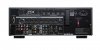
And for the budget minded millionaires that don't want custom built you have something like this. Plenty of XLR outputs for all speakers, including two subs.
DN-500AV_Rearb.jpg
 
Last edited:
And here's the thing, I have said several times here I have nothing against using high level inputs, the two subs connected with the Jamos are using their high level inputs out of convenience. I'm just aware it's not the best connection method, that doesn't make it bad.


I think that is how I stand on this "myth" also.
I have in the past, used both types, but simply realized one (High level) was somewhat more of a compromise to the signal integrity.
 
Except for the fact, that high-level inputs have been both objectively and subjectively determined to have better performance, in some cases. I've seen the measurements, and heard the results. Whether some choose to believe it or not, doesn't change the facts.

Regards,
Gordon.
Subjectively, any outcome could be favored by someone.

Objectively, not sure how adding another amp and the circuit to subsequently lower its level back to "low", then actively re-boost that level to a high level again........??

Just curious, do you feel the transition from a high level back to a low level signal is not detrimental at all?

(let me add, I have done BOTH ways in the past, and not just arguing with you, but find it an interesting view. I have read a lot going against your "view")
 
much of what we base our decisions on in this hobby are theory, but which is the cleaner signal is not. whether we will hear the difference is subjective, I choose to err on the side of a cleaner signal, if others don't that's their choice.

And as you, I'm having fun spinning records on the theoretically superior design of my Well Tempered Lab Turntable lol.

Again, there is no question that preamp is cleaner by bypassing the amp. That is fact. That said, in the real world, the additional "noise" from the amp is typically several levels below imperceptible because any meaningful amp noise would be heard in the mains far more than in the sub. That does not mean lower noise line-level connection can't be the better option for a given system, but the typical case is that the "noise" will be audible.

The other side is that driving the sub with speaker-level inputs allows the sub to receive the exact same signals as the mains. This offers the potential for the sub to more seamlessly integrate with the mains because they both receive the exact same signal. That is a also a fact. However, like reduced noise with preamp connections, there is no guarantee that the uniform signal across subs and mains will actually translate into audible benefits (it will very much depend on individual components/environments).

Both sides are facts, and neither side is inherently less worthy or more worthy than the other. Which is better in any real-world system will be situational based upon each individual components, listening environment, etc. The only way to know which is better for your system is to try both to, first determine whether you can hear a difference at all, and then to decide which is better for your environment. That answer, of course, only applies to your individual environment, it will not be a general answer for all.

And here's the thing, I have said several times here I have nothing against using high level inputs, the two subs connected with the Jamos are using their high level inputs out of convenience. I'm just aware it's not the best connection method, that doesn't make it bad.

I don't think you have any basis to to determine that "it's not the best connection" other than presumptions that one side (lower noise) is more important than the other (same exact signal).

As I understand it, and apologies if I'm wrong (but it's hard to find your description with all these posts), you are using speaker-level out of necessity -- so you have some subs connected by line-level and one connected by speaker-level. I would say that this isn't an example of evaluating line-level versus speaker-level because you haven't compared the sound quality of each in an identical setting (again apologies if I'm not remembering right). As stated above, the only way to compare both options is to take the exact same mains and subs, in the exact same locations, and to directly compare the sound quality of speaker-level versus line-level to determine if you can hear a difference (first) and then determine which is your preference. Of course, whatever any of us find with our own testing will be relevant to our system/environment only -- it is not a referendum on what happens in all systems (no such generalization is possible).

 
Last edited:
Oh no not at all I only have one of those beasts couldn’t have 2 in my smallish room it’s only 14x16, but I admit I did think about it .

Audiofreak71

You could have two subs and get better quality bass unless the one sub is providing the best bass you can get.

I had one bucket sub initially which was ok then I got two which was better. Eventually built two more and the bass is so much better.
 
With a quality amp and quality powered sub with both properly connected and working as they should there should be absolutely NO extra noise coming from the sub from using the speaker level inputs.

If there is noise, something is wrong or a cheap amp or powered sub was used.

I speak from my experience of using speaker level inputs on a powered sub with 100 watt Dayton Audio plate amp and hearing NO noise in the sub from that connection.

That's just been my experience.

Others may have had a different experience which boils down to either their equipment or how they connected it with everything else.

Ground loops are a real thing and one must remember to do what can be reasonably done to prevent them.
 
Lest anybody think speaker-level is "fringe audiophile" stuff -- and frankly I would mostly suspect that prior to having direct experience -- it's not fringe stuff. I discovered it by accident, long before I ever thought about or read about it sounding better because the sub signal matched the mains.

I had a small JVC executive system (all-in-one receiver/CD/speakers) -- it was a $500 mini system -- so it was fairly high quality for what it was, but definitely nothing like a high-end system. At the time I bought it, I didn't happen to have an RCA cable for the JVC sub output, so I begrudgingly connected the sub via speaker-level. I honestly felt pretty icky about using speaker-level because it seemed crude and I was certain it would be worse (especially since the JVC amp was not a powerhouse - I think 15-20wpc). Nonetheless, I was anxious to hear the system with the sub, and this was pre-amazon Prime one-day delivery for an RCA cable, so I just used speaker wires as a temporary solution. It sounded great.

I used it like that for about a year until I happened to have an RCA cable free, so I switched it to line level and was anxious to hear the results. It didn't sound as good. Specifically the sub sounded more isolated from the mains instead of being a seamless extension of the mains. I left it connected via line level for a while, tweaking the sub controls over a few days to try to get it to sound better, but then I just switched back to speaker level and left it that way. I thought it was an idiosyncrasy of that system, but I've found that to be the same experience with every 2-channnel system I have. It was only much later when reading an article that I understood how and why speaker-level can sound better than line-level it could possibly sound better -- I should have figured it out on my own, but it's pretty hard to even think about the possibility of speaker-level sounding better than line-level, so my brain never went there.

For 5.1/7.1 or mixed theater/music use, I always use LFE and never use speaker-level, but for 2-channel, speaker-level has always sounded more integrated in my systems. Everybody's mileage may vary -- I wouldn't dream of saying speaker-level is better for the general case -- I do encourage trying both and choose what works best in your system (and hopefully report back what you found in your testing so we can all benefit from your experience!).
 
Last edited:
"The other side is that driving the sub with speaker-level inputs allows the sub to receive the exact same signals as the mains"

untrue, only the amp for the sub receives the exact same signal, that signal is then changed at least as much as the power amp changes the signal from the preamp. And I posit it's even more of a change if the power amp is of higher quality than the sub, like my Belles vs the plate amp in my Dayton subs.

as such your theory holds as much water as a window screen.

using line level, the amp for the mains and the amp for the sub now receive exactly the same signal, fact, if both amps are trying to achieve neutrality I see their odds of having the same signal at the other end much improved over daisy chaining.

If this is so important to you then I suggest getting a passive sub or two, then using identical amps to drive your mains and your sub, easy peasy. This is the only way you will achieve what you're looking for, fact.
 
Last edited:
"The other side is that driving the sub with speaker-level inputs allows the sub to receive the exact same signals as the mains"

untrue, only the amp for the sub receives the exact same signal, that signal is then changed at least as much as the power amp changes the signal from the preamp. And I posit it's even more of a change if the power amp is of higher quality than the sub, like my Belles vs the plate amp in my Dayton subs.

as such your theory holds as much water as a window screen.

using line level, the amp for the mains and the amp for the sub now receive exactly the same signal, fact, if both amps are trying to achieve neutrality I see their odds of having the same signal at the other end much improved over daisy chaining.

If this is so important to you then I suggest getting a passive sub or two, then using identical amps to drive your mains and your sub, easy peasy. This is the only way you will achieve what you're looking for, fact.

It is absolutely true. The sub is driven by exactly the same signal as the mains. I did not say the subwoofer's driver receives the exact same signal as the mains (THAT would be untrue). As I've already said, but you choose to ignore, you CANNOT remove the amp in a powered sub -- the presence of the amp is a given -- the only thing you can control is what signal you feed it.

Passive subs are a fringe solution -- 99% of people who are considering subs will be using powered. A passive sub is not an option for 99% because there are few on the market and -- much more importantly -- you would need a much more powerful 2-channel amp for it to simultaneously drive both the mains and the passive sub (which is the only way to remove the sub amp layer you are concerned about) in order for it to come close to matching what a powered sub can do with even a modestly-powered 2-channel amp.

I don't know why you pick fringe solutions (like passive subs or fringe sub examples without speaker-level) to try to make a general point. My statement that the sub (not the sub driver) is driven by the same signal is exactly 100.000% accurate without any ambiguity.

This thread has run around this same circle at least 5 times now, I believe it has run its course.

View attachment 2027624

You are the only one who is kicking it by ignoring what has already been explained in detail many, many times.
 
Last edited:
You could have two subs and get better quality bass unless the one sub is providing the best bass you can get.

I had one bucket sub initially which was ok then I got two which was better. Eventually built two more and the bass is so much better.
I have had dual subs and they do work great and sound great if dialed in correctly. However, my current sub which is I would guess be considered high end provides controlled bass that when called upon is visceral. As said before my sub has been dialed in using REW so with that said it sounds like nothing is there unless you go look at it.

Audiofreak71
 
Von Schweikert Ultra 11 speakers (dual powered 15" in each) with Shockwave Subwoofers, driven from VAC Statement 452iQ amplifiers:

ultra_11_452iq.jpg

ultra_11_rear.jpg

shockwave.jpg

Every powered subwoofer you see in these pictures (the two 15" drivers in each of the Ultra 11s- each one has its own sub amp, with separate controls at the center of the cabinet- and the Shockwaves) is being run with speaker-level inputs, feeding from the four VAC Statement 452iQ power amplifiers.

This is a speaker setup that is about $350,000.00 retail. Do you seriously think they wouldn't have used a different connection method, if there was ANY performance advantage over doing it this way? It certainly wouldn't have been about cost, obviously.

BTW: A review of a system equivalent to this one (same components):

http://www.enjoythemusic.com/Capital_Audiofest_2019/Weaver/page5.htm

Regards,
Gordon.
 
Last edited:
It is absolutely true. The sub is driven by exactly the same signal as the mains. I did not say the subwoofer's driver receives the exact same signal as the mains (THAT would be untrue). As I've already said, but you choose to ignore, you CANNOT remove the amp in a powered sub -- the presence of the amp is a given -- the only thing you can control is what signal you feed it.

Passive subs are a fringe solution -- -- but 99% of people who are considering subs will be using powered. A passive sub is not an option for 99% because there are few on the market and -- much more importantly -- you'd need a much more powerful 2-channel amp for it to drive both the mains and the passive sub (the only way to remove the sub amp layer) in order to match what a powered sub can do with even a low power 2-channel amp.

I don't know why you pick fringe solutions (like passive subs or fringe sub examples without speaker-level) to try to make a general point. My statement that the sub (not the sub driver) is driven by the same signal is exactly 100.000% accurate without any ambiguity.


You are the only one who is kicking it by ignoring what has already been explained in detail many, many times.
again wrong, my son is using a 35watt per channel amp to drive Canton speakers with a Canton passive sub, the sub originally sold for $650 so it's quite a nice unit.

You keep making these assertions as if they're facts, they are not, only conjecture.
 
I used it like that for about a year until I happened to have an RCA cable free, so I switched it to line level and was anxious to hear the results. It didn't sound as good. Specifically the sub sounded more isolated from the mains instead of being a seamless extension of the mains. I left it connected via line level for a while, tweaking the sub controls over a few days to try to get it to sound better, but then I just switched back to speaker level and left it that way. I thought it was an idiosyncrasy of that system, but I've found that to be the same experience with every 2-channnel system I have. It was only much later when reading an article that I understood how and why speaker-level can sound better than line-level it could possibly sound better -- I should have figured it out on my own, but it's pretty hard to even think about the possibility of speaker-level sounding better than line-level, so my brain never went there.

Phase shift is most of the reason the speaker level inputs sounded better.

There was some phase shift in the two channel amp at the lower bass frequencies and said phase shift was different from the phase shift (if any) in the subwoofer amp.
 
again wrong, my son is using a 35watt per channel amp to drive Canton speakers with a Canton passive sub, the sub originally sold for $650 so it's quite a nice unit.

You keep making these assertions as if they're facts, they are not, only your conjecture.

I take it the passive sub is dual voice coil and is perfectly matched in output to the mains and has some sort of passive crossover?
 
again wrong, my son is using a 35watt per channel amp to drive Canton speakers with a Canton passive sub, the sub originally sold for $650 so it's quite a nice unit.

You keep making these assertions as if they're facts, they are not, only your conjecture.

Again, your fringe niche example does not mean anything for the general case. Additionally, any decent quality powered sub, which will have hundreds of watts to power for the sub alone, is going to kick the living crap out of a main/passive sub driven by a 35 watt per channel amp. That's not to say that the Canton combo isn't great -- I'd love to hear it -- but it's just not anything close to relevant for the general discussion of subs (99% of which will tend to be be powered, for good reason).
 
I take it the passive sub is dual voice coil and is perfectly matched in output to the mains and has some sort of passive crossover?

yes, they were designed to work together.

although I've had great luck using the same sub with small realistic speakers like the Minimus 7, and Pro X77 with the Linaeum tweeter, now that was a nice combo.

The Pro X77 is quite nice once the cast aluminum cabinet is damped, and filled with acoustic insulation to quiet the port tube.

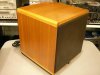
If you've never heard them the Canton Plus S is the best Minimus 7 sized speaker ever made, and they aren't too shabby to look at either. They also made a powered version of the sub, I believe the one pictured is such.
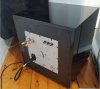
CANTON-PLUS-B-SUBWOOFER-DA-30-Cm-CON-3.jpg

Canton-Plus-S-Regal-LAUTSPRECHER-BOXEN-Kult-Echtholz.jpg

I've had several, all black, would like to get a set in the wood veneer someday, and they also came in white.
 
Last edited:
Back
Top Bottom