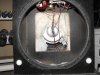
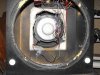
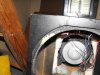
Just took another look inside. Here are pictures of the inside from the passive side. This shows how I found the damping material in one speaker. The other shows how I pressed the damping to the sides to make sure the woofer moves free. The bracing I am referring to separates the woofer chamber from the chamber the passive is in. I don’t know if the damping should obstruct the pressures between the chambers. There was no gasket or sealant. Thanks again for all the help. Good Karma to you all------Audio style!


You are using an out of date browser. It may not display this or other websites correctly.
You should upgrade or use an alternative browser.
You should upgrade or use an alternative browser.
ADS 1230 or ESS 1a
- Thread starter Squirrely
- Start date

Porkloin
Oscar Heil Groupie
4 Ohm L-Pads
They do indeed exist. Only rated for 15 watts, but the resistors in the circuit are rated for 10.
The next question is: Would these L-Pads be a source of noise not presented by the rotary switch and stationary resistors?
They do indeed exist. Only rated for 15 watts, but the resistors in the circuit are rated for 10.
The next question is: Would these L-Pads be a source of noise not presented by the rotary switch and stationary resistors?
Sheesh. Place the stranded polyfill as close to woofer as possible and use very little if any nearest to the disc.
The brace is an anti-resonant panel coupler. It measures 2" top / side(s) and the lowermost crossmember is 3" wide. They don't envelop nor separate anything really. Merely anti-resonance.
Those are the original woofer motors.
1a sets came with 4 prong T fasteners and machine thread screws on both the woofers and passives, you can leave them be.
The passive 'flange' is a compressible gasket in and of itself. The woofers should have gaskets in place already, if not removed since new.
Take, your time. These were developed when audio engineers were actually employed by ess. The only end user addendum i can recommend would be to run a swath of grill material stapled to the interior to prevent the fill from migrating downward... and i wouldn't even bother with that to be honest. You shouldn't have to reseal anything, you needn't be attempting to realign anything, and you really wouldn't want to be replacing anything. Unless of course a component failure exists. This is not a poorly thought out speaker build.
HTH
L7
The brace is an anti-resonant panel coupler. It measures 2" top / side(s) and the lowermost crossmember is 3" wide. They don't envelop nor separate anything really. Merely anti-resonance.
Those are the original woofer motors.
1a sets came with 4 prong T fasteners and machine thread screws on both the woofers and passives, you can leave them be.
The passive 'flange' is a compressible gasket in and of itself. The woofers should have gaskets in place already, if not removed since new.
Take, your time. These were developed when audio engineers were actually employed by ess. The only end user addendum i can recommend would be to run a swath of grill material stapled to the interior to prevent the fill from migrating downward... and i wouldn't even bother with that to be honest. You shouldn't have to reseal anything, you needn't be attempting to realign anything, and you really wouldn't want to be replacing anything. Unless of course a component failure exists. This is not a poorly thought out speaker build.
HTH
L7

They do indeed exist. Only rated for 15 watts, but the resistors in the circuit are rated for 10.
The next question is: Would these L-Pads be a source of noise not presented by the rotary switch and stationary resistors?
You would have to take a 8ohm l-pad and wire the driver in series.
They should not be a source of noise-if so a good cleaning should take care of it.
Personally I think modern speakers should have l-pads on their drivers, as it makes tweeking life easier.
Last edited:
Personally I would keep the stock stuffing as is.
I disagree about removing it.
El-Seven is contradicting himself a bit-yes made by audio engineers-if so there must be a reason for the damping materiel.
2 reasons,(1) perhaps to fine tune the interior volume, but (2) more like to reduce midbass/lower midrange reflection from bouncing around in the interior and cause problems. You just fluff it up and distribute it evenly. It won't affect how the woofer operates-it's pretty light, unless you really pack it in next to the cone.
It can effect the passive some-but the movement of the passive eventually pushes it back-you just want some free space between the woofer and passive.
You could line the interior with foam-but IMHO just leave the stuffing-same amounts etc-as it works just fine with stock components.
I wanted to see the bracing, because I have seen 2 different types, yours and front to back. The latter may have been DIY.
Audio engineers don't always get it right. A number of reasons why this is the case.
I think most of us that have been around a manufacturing business can easily point to a few.
One here I can easily point to is the deletion of a foam ring of similar apparatus to prevent the lower frequencies from wrapping around the Great Heil housing and canceling- true when the Heil is crossed over low, like the AMT1a's.
This cancellation effect has been fairly well documented for a number of years, and adding foam wings to the sides does make a audible and measurable difference. Somewhere I have 2 articles saved on this, including measurements.
Nothing wrong with tweeking, that's the spirit of DIY and Audio Karma.
IMHO it's more of a embracing and a real appreciation of the product, then just letting things be, as is.
Hell, were would we be if we were all satisfied with the status quo.......:scratch2:
All of the OP's and members questionson this thread are valid ones IMHO-so far anyway.
How do you know if you don't ask ?
None of us with born with innate knowledge.
These threads provide a rich source of information, opinions and experiences.
Sure you have to pick and choose, filter if you may, but that's the way it's always been.
I disagree about removing it.
El-Seven is contradicting himself a bit-yes made by audio engineers-if so there must be a reason for the damping materiel.
2 reasons,(1) perhaps to fine tune the interior volume, but (2) more like to reduce midbass/lower midrange reflection from bouncing around in the interior and cause problems. You just fluff it up and distribute it evenly. It won't affect how the woofer operates-it's pretty light, unless you really pack it in next to the cone.
It can effect the passive some-but the movement of the passive eventually pushes it back-you just want some free space between the woofer and passive.
You could line the interior with foam-but IMHO just leave the stuffing-same amounts etc-as it works just fine with stock components.
I wanted to see the bracing, because I have seen 2 different types, yours and front to back. The latter may have been DIY.
Audio engineers don't always get it right. A number of reasons why this is the case.
I think most of us that have been around a manufacturing business can easily point to a few.
One here I can easily point to is the deletion of a foam ring of similar apparatus to prevent the lower frequencies from wrapping around the Great Heil housing and canceling- true when the Heil is crossed over low, like the AMT1a's.
This cancellation effect has been fairly well documented for a number of years, and adding foam wings to the sides does make a audible and measurable difference. Somewhere I have 2 articles saved on this, including measurements.
Nothing wrong with tweeking, that's the spirit of DIY and Audio Karma.
IMHO it's more of a embracing and a real appreciation of the product, then just letting things be, as is.
Hell, were would we be if we were all satisfied with the status quo.......:scratch2:
All of the OP's and members questionson this thread are valid ones IMHO-so far anyway.
How do you know if you don't ask ?
None of us with born with innate knowledge.
These threads provide a rich source of information, opinions and experiences.
Sure you have to pick and choose, filter if you may, but that's the way it's always been.
Last edited:
Audiokarma is a beautiful thing. A place to learn as we go. I have learned so much since my days lurking. I lurked around for a while because to become a member and start a thread is to reveal ignorance and ask for help. The old cliché “the only dumb question is the one you don’t ask” is true but the real tragedy of this is that when the question is not asked, I live with the consequences of ignorance and am prone to spreading misinformation. Audiokarma is so great because people are not afraid to voice thoughts weather accurate, inaccurate or just opinion. People respond and correct inaccuracy and debate opinion all the time. It’s no big deal. It’s hard being a beginner at anything, but the forum has an etiquette and standard of values that allow for all of us to jump in at any level of experience and knowledge. Audiokarma is a beautiful thing!
So back to business. If I understand what was said, I should not press the damping against the cabinet walls. Instead I should fluff it all throughout the woofer cavity and fluff the material that is settled down in the bottom of the cabinet so it loosely fills the entire space behind the passive as well.
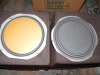
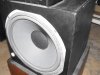
My passive diaphragm is in an aluminum frame. There is nothing compressible between the aluminum and the cabinet. Here is a picture of the passives.
So back to business. If I understand what was said, I should not press the damping against the cabinet walls. Instead I should fluff it all throughout the woofer cavity and fluff the material that is settled down in the bottom of the cabinet so it loosely fills the entire space behind the passive as well.
My passive diaphragm is in an aluminum frame. There is nothing compressible between the aluminum and the cabinet. Here is a picture of the passives.
Attachments

I suppose you could use blue tack for the passives.
You can still find thin gasket paper at most auto parts stores, or Amazon.
Then use some 3M weatherstrip adhesive to attach to the frames.
Or maybe use some silicone-make a thin wide bead, and let it cure for a couple days.
It would still stick, but not as bad as gluing them in.
Make the P.E. gasket material is too thick-it does compress nicely though.
The gasket will also provide some decoupling effect as aluminum can be resonate.
Just evenly distribute the damping material, bottom up, no clumps and you should be good.
You can still find thin gasket paper at most auto parts stores, or Amazon.
Then use some 3M weatherstrip adhesive to attach to the frames.
Or maybe use some silicone-make a thin wide bead, and let it cure for a couple days.
It would still stick, but not as bad as gluing them in.
Make the P.E. gasket material is too thick-it does compress nicely though.
The gasket will also provide some decoupling effect as aluminum can be resonate.
Just evenly distribute the damping material, bottom up, no clumps and you should be good.
Last edited:
This is all good news for restoring base response. Easy fixes. I like the idea of using a silicone bead going around the aluminum frame. I was wondering why there was a felt ring around the passive on the outside. Intuitively I knew it would be appropriate as the compressible seal if it were on the inside but I have not had enough experience to recognize the obvious. Thank god for digital cameras. I suppose I can use a dab of silicone to adhere a weight to the diaphragm as well.
The woofers are the same way with the felt on the outside. Because the woofer is active proper gasket tape may be more important rather than a simple silicone bead. Last night I ordered gasket seal tape from Parts Express. They also sell 12” gaskets as whole continuous rings or as 4 part rings. Any thoughts on this?
Attachments

The felt ring on the woofer is just another version of the cardboard gasket.
Most speakers have them-they help keep the surround edges from lifting-and also provide a seal if you want to install the woofers from the inside of the cab.
You could also use thin felt as a gasket-of the P.E. pre-cut ones.
Most speakers have them-they help keep the surround edges from lifting-and also provide a seal if you want to install the woofers from the inside of the cab.
You could also use thin felt as a gasket-of the P.E. pre-cut ones.
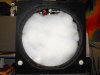
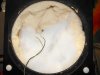
Fluffed up damping. Does this look right?
Looking good!:thmbsp:
If you get the chance, measure the internal dimensions of the box.
It's a pain I know, but I get asked this quite a bit.
A few have ended up with boxes, and only Heils, of just bare boxes.
And looking for replacement woofers that might work.
Sound crazy, but if you live in New Zealand, or Australia, that's what you may have to work with.
The AMT3 is 2.7 cu ft, or 76.44 liters/73.622 with tube/woofers/crossovers.
The VAS of the ST255.8 is 48.7, which makes it close to ideal in the AMT3 enclosure.
Not perfect, but it provides a nice even/flat response that tapers so slightly below 100hz on down to box tuning (42.1hz) and then fairly steeply after that of course. 2x3" ports 6"l.
What this woofer does is gives you increased output without compression at higher volumes with out a trace of boom. or midbass humps. The transient response is outstanding. With room gain you have usable output to 32 hz or so with no doubling etc-nice and clean, like the rest of the speaker.
But you have to port it.
I used it originally in the stock leaky sealed/ported setup, and the low bass output was a disappointment.
Th xmax @ 5.5mm is conservative, as I have pushed them hard with low bass content material were they should be on paper exceeding x-max with no problems. A educated guess is x-damage is around 7mm, but a subsonic filter is recommended.
This woofer is only for vented systems.
It's a pain I know, but I get asked this quite a bit.
A few have ended up with boxes, and only Heils, of just bare boxes.
And looking for replacement woofers that might work.
Sound crazy, but if you live in New Zealand, or Australia, that's what you may have to work with.
The AMT3 is 2.7 cu ft, or 76.44 liters/73.622 with tube/woofers/crossovers.
The VAS of the ST255.8 is 48.7, which makes it close to ideal in the AMT3 enclosure.
Not perfect, but it provides a nice even/flat response that tapers so slightly below 100hz on down to box tuning (42.1hz) and then fairly steeply after that of course. 2x3" ports 6"l.
What this woofer does is gives you increased output without compression at higher volumes with out a trace of boom. or midbass humps. The transient response is outstanding. With room gain you have usable output to 32 hz or so with no doubling etc-nice and clean, like the rest of the speaker.
But you have to port it.
I used it originally in the stock leaky sealed/ported setup, and the low bass output was a disappointment.
Th xmax @ 5.5mm is conservative, as I have pushed them hard with low bass content material were they should be on paper exceeding x-max with no problems. A educated guess is x-damage is around 7mm, but a subsonic filter is recommended.
This woofer is only for vented systems.
Fluffed up damping. Does this look right?
Your 'base' will thank you.
 Nicely done!
essNeff
Active Member
Audiokarma is a beautiful thing. A place to learn as we go. I have learned so much since my days lurking. I lurked around for a while because to become a member and start a thread is to reveal ignorance and ask for help. The old cliché “the only dumb question is the one you don’t ask” is true but the real tragedy of this is that when the question is not asked, I live with the consequences of ignorance and am prone to spreading misinformation. Audiokarma is so great because people are not afraid to voice thoughts weather accurate, inaccurate or just opinion. People respond and correct inaccuracy and debate opinion all the time. It’s no big deal. It’s hard being a beginner at anything, but the forum has an etiquette and standard of values that allow for all of us to jump in at any level of experience and knowledge. Audiokarma is a beautiful thing!
So back to business. If I understand what was said, I should not press the damping against the cabinet walls. Instead I should fluff it all throughout the woofer cavity and fluff the material that is settled down in the bottom of the cabinet so it loosely fills the entire space behind the passive as well.
My passive diaphragm is in an aluminum frame. There is nothing compressible between the aluminum and the cabinet. Here is a picture of the passives.
Always fluffed. These speakers can be 30+ years old and are usually encountered with some repairs and changes.
Last edited:
Similar threads


- Replies
- 86
- Views
- 6K


- Replies
- 228
- Views
- 29K